The Numbers at a Glance
The range of answers to “how long does a shower remodel take” is genuinely wide — from a single day for a prefab acrylic replacement to 7+ weeks for a full custom tile walk-in shower build. The right answer for your project depends on what you’re actually doing. Here’s the full picture:
⚠️ Construction Time vs Total Project Time Are Very Different
There are two timelines every homeowner needs to understand: construction time (how long workers are actually in your home) and total project time (from signing a contract to your first shower). Construction time for most shower projects is 1–5 days. Total project time — including planning, permitting, material lead times, and contractor scheduling — is typically 4–14 weeks. At JSB Home Solutions, projects are scheduled 12–14 weeks from contract signing, with 3–5 active construction days. Don’t confuse the two when planning your project calendar.
What Affects Your Shower Remodel Timeline
Before diving into specific timelines, it’s worth understanding the five variables that determine where your project falls on the spectrum between “done in a day” and “still going after six weeks.” Most timeline overruns trace back to one or more of these factors being underestimated during planning.
📐 Scope of Work
The scope affects the timeline because it dictates how much work actually needs to be done. A simple vanity swap takes a day or two; remodeling a shower, tiling the floor, and moving the toilet takes considerably longer. The most time-consuming scope items are plumbing relocation, structural wall changes, and waterproofing of large custom enclosures.
🚿 Shower Type
A prefab acrylic unit installs in a day. A custom tile shower with a curbless floor, built-in bench, and frameless glass door takes 7–14 construction days. The shower type is the single biggest predictor of construction time. Know exactly which type you’re getting before forming timeline expectations.
🔩 Plumbing Complexity
Reusing existing drain and supply locations dramatically shortens any shower project. “Moving supply lines is expensive, and moving drainage lines is twice as expensive,” notes Angi Expert Board member Bob Tschudi. Moving plumbing also adds days, requires permits, and may involve subfloor access — easily adding 3–7 additional construction days to any project.
🐛 Hidden Surprises
Your contractor won’t know exactly what they’re up against until they expose plumbing and support beams during demolition. An experienced remodeler won’t be stumped by outdated plumbing or rotting wood — they may just need a few extra hours. However, severe water damage, mold, or structural rot discovered during demo can add days to weeks depending on extent.
📦 Material Lead Times
Custom-cut frameless glass shower doors take 2–4 weeks from order to delivery. Imported tile can add weeks if not ordered well in advance. Natural stone slabs may require 4–6 weeks. Standard materials from local suppliers are typically available in days. Getting the perfect tile, stone, and wood will add time to your project and must be accounted for before you begin.
👷 Contractor Availability
After interviewing contractors and receiving bids, it typically takes a few days to sign contracts, and about a week to apply for and obtain permits. Top-tier contractors are often booked 8–14 weeks out. Rushing to use a contractor with immediate availability is a common cause of quality problems. Book 3–4 months ahead for busy seasons (spring through fall).
Shower Remodel Timeline by Project Type
Rather than giving a single average that serves no one well, here is the realistic breakdown by the four most common shower project types. Find your project type and use that timeline for planning purposes.
| Project Type | Construction Days | Total Timeline | Bathroom Out of Service |
|---|---|---|---|
| Prefab acrylic / fiberglass unit | 1–2 days | 3–6 weeks (incl. lead time) | 1–2 days |
| Simple like-for-like shower replacement | 3–5 days | 4–8 weeks | 3–5 days |
| Custom tile walk-in shower (no structural) | 7–14 days | 6–12 weeks | 7–14 days |
| Full bathroom remodel (incl. shower) | 15–30 days | 8–20 weeks | 3–4 weeks |
| Major remodel (structural changes, plumbing move) | 20–40 days | 12–24 weeks | 4–6 weeks+ |
Prefab / Acrylic Shower: 1–3 Construction Days
Most new material installation happens in one or two days. This is where experience really lends itself to timeliness — the more times your installer has built a shower just like yours, the faster they can complete it.
A prefab or acrylic shower system — where all components arrive factory-made and the installer simply assembles them on site — is the fastest remodel option available. Companies specializing in acrylic shower systems (like ZINTEX, which specializes in acrylic showers and can transform bathrooms in as little as 24 hours) have refined the process to a near-mechanical efficiency. Day 1 is demolition and any required plumbing adjustments; Day 2 (often the same day or early Day 2) is installation of the base, wall panels, door, and fixtures.
The limitation of prefab systems is design flexibility — you’re choosing from a catalog of available sizes, colors, and configurations rather than building a custom design. For homeowners who want their bathroom back fast and aren’t attached to custom tile, this is by far the most time-efficient choice.
How Long Does It Take to Replace a Shower? (3–7 Days)
On average, it takes around three to five days to replace a shower. However, if there are additional elements like re-tiling or installing another showerhead, expect the process to last longer.
A “like-for-like” shower replacement — removing the existing shower and installing a new one in the exact same footprint, reusing the existing drain location and supply rough-in — is the bread-and-butter scope for most bathroom contractors. If you’re replacing existing features with new ones in the same layout, the job could be done within a week.
Three to five days covers: one day of demolition (removing the old unit, backer board, and any damaged waterproofing); one day for new backer board, waterproofing, and rough-in adjustments; one to two days for tile or panel installation (depending on material choice); and one final day for the door, fixtures, caulking, and cleanup. Add a day on each end for any material that needs to cure or set.
📅 Day 1: Demolition
Remove old shower unit, tear out existing surround material and backer board, inspect framing and subfloor for water damage. Any rot discovered here extends the timeline. A clean demo with no surprises takes 4–6 hours.
📅 Day 2: Prep & Waterproofing
Install new cement backer board, apply waterproofing membrane. Waterproofing requires 24 hours to cure before tile installation can begin — this mandatory pause is why replacement takes 3–5 days even when installation itself is fast.
📅 Days 3–4: Tile or Panels
Install new wall surface (tile or acrylic panels) and shower base/floor. Tile work requires setting time between wall tile and grout, adding a day. Prefab panel systems can be installed in a few hours on this day.
📅 Day 5: Fixtures & Finishing
Install shower door, connect valve and shower head, caulk all transitions, final cleaning. Allow 24 hours before first use for caulk and grout to fully cure. Total: 5 working days, bathroom out of service 4–5 days.

Custom Tile Walk-In Shower: 1–3 Construction Weeks
A fully custom tiled walk-in shower — new layout, tile walls, tiled floor, curbless entry, and frameless glass door — takes 7–21 construction days depending on size and complexity. If you’re planning a more elaborate overhaul with advanced features like multiple shower heads or custom tiling, prepare for the work to extend up to three or four weeks, especially if structural adjustments are needed.
A fully custom tile shower is the project where timeline expectations most frequently diverge from reality, because multiple trades and multiple cure-time-dependent stages must complete sequentially. Each stage has a mandatory minimum wait time that cannot be compressed regardless of how fast the tradespeople work.
⚠️ The Glass Door Lead Time Trap
Custom-measured frameless glass shower doors are the single most common cause of project extension in custom tile shower builds. The glass must be ordered after the tile is set (so measurements are final), and then takes 2–4 weeks to fabricate. Construction work completes at day 14, but the shower isn’t usable until the door arrives and is installed at day 28–42. Plan your project timeline with the glass lead time built in from the start — and get the glass measurement taken and the order placed the moment the tile is grouted.
Full Bathroom Remodel Including Shower: 3–7 Weeks
It usually takes three to four weeks to complete a small bathroom remodel. The average time for a small bathroom remodel is 23 days. Sweeten general contractors say the construction period averages 20–30 working days. Overall, a renovation can take between six weeks to three months from planning to punch list.
A full bathroom remodel — shower, flooring, vanity, toilet, and all finishes — involves coordinating multiple trades in a specific sequence that cannot be easily accelerated. Each trade (plumber, tile setter, electrician, carpenter, painter) must complete their work before the next can begin, and several stages have mandatory cure times between them.
The construction sequence matters enormously: plumbing rough-in happens before any surface work; electrical rough-in before drywall; waterproofing before tile; tile before fixtures; painting before trim. Skipping or shortcutting any step in this sequence produces failures that are far more expensive to repair than the time saved. A well-run full bathroom remodel with a competent general contractor takes 3–4 weeks of active construction and feels organized and predictable. A poorly managed one can stretch to 8+ weeks with the same scope of work.
Phase-by-Phase Breakdown: The Complete Timeline
Design consultations, contractor selection and bidding, material specification, and permit applications. Applying for and obtaining permits typically takes about a week, but it’s best to give yourself wiggle room — once submitted, the approval timeline is out of your control. In dense urban markets, permit approvals can take weeks to months. Most bathroom permit applications are approved in 5–15 business days in standard suburban markets. Order all long-lead materials (tile, glass door, fixtures) during this phase to minimize waiting later.
Removal of existing shower unit, wall surround, backer board, and any damaged waterproofing. A standard tub-to-shower conversion demo takes about half a day; a full bathroom gut takes 1–2 days. Your contractor won’t know exactly what they’re up against until they expose plumbing and support beams during demolition. Mold, rot, asbestos (in pre-1980 homes), or outdated plumbing discovered here can add 1–5 days for remediation before construction continues.
If plumbing stays in place: new supply valves, backer board installation, and drain connection take 1 day. If drain or supply locations move: add 1–2 days for the plumbing rough-in, which must be inspected and approved before walls are closed. New cement board or waterproof backer installation happens in this phase to create a stable, non-organic tile substrate.
The most critical and most frequently rushed phase of any shower build. A waterproofing membrane (RedGard, Schluter KERDI, Wedi, or similar) is applied to all walls, floor, and the critical transitions at corners and drain. The waterproofed area is not to be walked on because a single pinprick might render the entire waterproofing unusable. Membrane application takes 3–5 hours; the cure time adds a mandatory 24–48 hour pause before any tile work begins. This pause cannot be shortened without compromising the waterproofing.
Phase 5: How Long Does It Take to Tile a Shower?
Tiling can add time to a shower remodel — usually three to four full days — while prefabricated parts can make the job go quicker. This includes tile setting time, thin-set cure period (24 hrs), grouting, and grout sealing — each requiring a separate day with mandatory waits between stages.
Tiling a shower is one of the most time-intensive phases of any shower remodel — and the one most affected by the cascade of mandatory cure times between stages. Here is the realistic day-by-day breakdown:
Floor tile is set first so it can be grouted while wall tile is still being set, and so that wall tile sits on top of floor tile at the base for proper waterproofing sequencing. A professional tile setter can set a standard 36–48 sq ft shower floor in a half to full day depending on tile size and layout complexity. Small mosaic tiles take significantly longer than large-format tiles.
Standard thin-set mortar requires 24 hours to achieve initial cure strength before grouting or applying weight. Rapid-set mortars can reduce this to 3–4 hours, but most professional tile setters use standard thin-set for shower floors because rapid-set has reduced adhesion flexibility that can cause cracking on shower floors subject to thermal cycling.
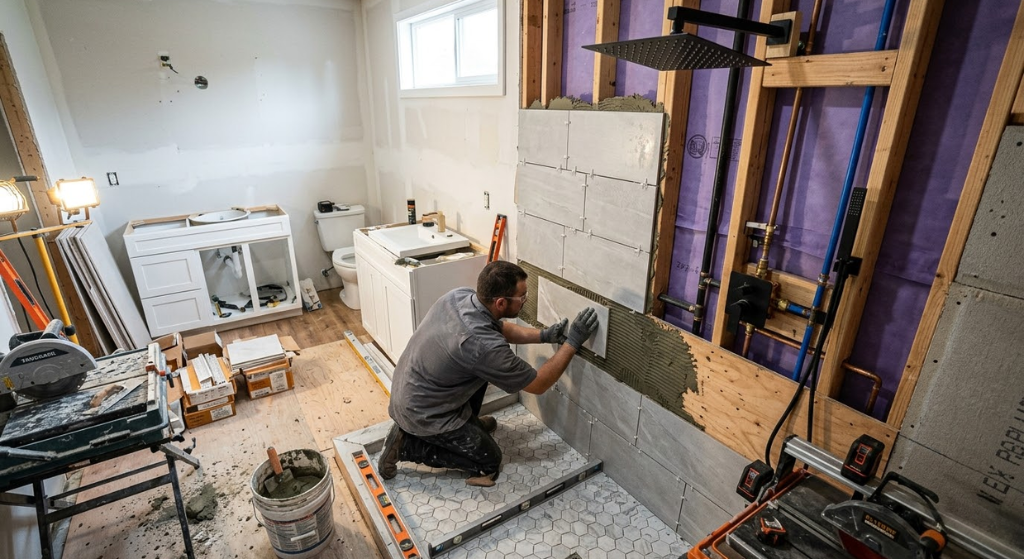
Three-wall shower surround tile typically takes 1–2 days for a professional depending on tile size and design complexity. Large-format tiles (12×24 or larger) install faster than small subway tiles or mosaic patterns. A feature wall or niche insert with a contrasting tile pattern adds half a day. Cuts around niches, fixtures, and corners require precision and take more time than open field tiles.
After wall tile is set, another 24-hour cure wait. Then grouting begins — floor first, walls second. Grouting a standard 3-wall shower plus floor takes a professional tile setter 4–6 hours. The grout must then be sealed after an additional 24-hour cure period.
Grout requires 24–72 hours to cure before sealer application depending on grout type and ambient conditions. Sealing a tiled shower takes 1–2 hours and requires another 24-hour cure before the shower can be used with water. Total elapsed time from the first tile set to first shower use: typically 5–7 days.
What Makes Shower Tiling Faster or Slower
| Factor | Makes It Faster | Makes It Slower | Time Difference |
|---|---|---|---|
| Tile size | Large format (12×24+) | Small mosaic, penny tile, subway | Up to 2× longer for small tile |
| Tile layout pattern | Straight stack, simple running bond | Herringbone, diagonal, chevron | +30–50% time for complex patterns |
| Number of cuts | Simple rectangular shower, few fixtures | Multiple niches, bench, curved walls | +1–2 days for complex cut work |
| Mortar type | Rapid-set mortar (3–4 hr cure) | Standard thin-set (24 hr cure) | Up to 2 days faster with rapid-set |
| Installer experience | Specialist tile setter (professional) | General contractor or DIYer | 2–3× longer for inexperienced installer |
| Shower size | Standard 36×48 or 36×60 | Large walk-in, double-ended designs | +1–3 days for oversized showers |
DIY vs Professional Tiling Timeline
One of the most frequently underestimated aspects of shower tiling is how much longer it takes a first-time DIYer compared to a professional tile setter. The professional’s speed comes from two things: specialized tool efficiency (wet saw setup for continuous cutting vs moving and clamping for each cut) and practiced speed on repetitive operations (applying mortar, placing tile, checking level) that come only from having done the same task thousands of times.
| Task | Professional Tile Setter | Capable DIYer | First-Time DIYer |
|---|---|---|---|
| Floor tile (36×48 shower) | 3–4 hours | 6–8 hours | 1–2 days |
| Wall tile (3 walls, subway) | 1–1.5 days | 2–3 days | 4–7 days |
| Grouting (floor + walls) | 4–6 hours | 8–12 hours | 1–2 days |
| Total tile work (excl. cure times) | 2.5–3.5 days | 4–6 days | 7–14 days |
💡 When DIY Tiling Makes Sense
DIY tiling is a viable option for patient homeowners with basic tool competency who aren’t working to a deadline. The cost savings are real — labor is 40–60% of total project cost. But DIY tiling requires renting a wet saw, dedicating full days without other obligations, and accepting a significantly longer timeline. If the bathroom is your only bathroom in the home, or you’re under deadline pressure, hire a professional. If you have a second bathroom and unlimited weekend time, DIY tile work on a secondary shower can be an excellent project.
Phase 6: Fixtures, Door & Finishing
Connect shower valve and trim, install shower head and any accessories, install shower door or enclosure, apply silicone caulk at all transitions, and complete final cleaning and punch list. Standard framed door: install same day as fixtures (1 day total). Custom frameless glass door: measured after tile is complete, fabricated in 2–4 weeks, installed in 2–3 hours when it arrives. The glass wait period is the most common reason a technically complete shower sits unusable for additional weeks. Budget for this proactively.
Common Delays and How to Avoid Every One
🚿 Plumbing Surprises
Outdated galvanized pipe, improperly sloped drain lines, or unexpected structural framing behind the shower wall. Budget a 10–15% timeline contingency and ask your contractor specifically about what they’ve encountered in homes of your era and type. Homes built before 1970 have much higher surprise rates.
💧 Water Damage / Mold
Discovered at demo phase. A small area of soft drywall can be addressed in hours; significant structural rot or widespread mold can add 1–2 weeks for proper remediation before the bathroom can be rebuilt. Never rebuild over discovered mold — it always returns worse.
📦 Late Materials
Back-ordered tile, delayed glass doors, and out-of-stock fixtures are the most common preventable delay. Order everything 4–6 weeks before your construction start date. Have your contractor confirm all materials are on-site before demo begins. Never start demo with materials unconfirmed.
📋 Permit Delays
Vary enormously by jurisdiction. Some municipalities approve bathroom permits in 5 business days; others take 4–6 weeks. In jurisdictions with slow permitting, apply immediately after signing your contractor contract — don’t wait for design to be finalized before starting the application.
👷 Subcontractor Scheduling Gaps
When a general contractor uses separate plumbing, electrical, and tile subcontractors, gaps between their availability can add days of idle time to the project. Ask your GC how they sequence subcontractor work and whether they have dedicated subs versus scheduling from a pool.
🔄 Change Orders Mid-Project
Changing tile selection, adding a niche, or upgrading the fixture mid-construction triggers material ordering delays and scope recalculation. Every significant decision should be locked in before demo begins. Treat your pre-construction decisions as final.
DIY vs Professional: How Timeline Compares
| Project | Professional | Experienced DIYer | First-Time DIYer |
|---|---|---|---|
| Prefab unit replacement | 1–2 days | 2–4 days | 3–7 days |
| Tile shower (same footprint) | 5–7 days | 10–14 days | 3–6 weeks |
| Custom walk-in shower | 10–21 days | 4–8 weeks | 8–16 weeks |
| Full bathroom remodel | 3–5 weeks | 8–16 weeks | 6+ months |
The DIY timeline difference comes from three practical realities: working on weekends only (if employed full-time), learning curves on unfamiliar tasks, and the single-person-working-sequentially constraint vs a professional crew that can have multiple people completing tasks simultaneously. DIY is a viable path for secondary bathrooms and patient homeowners; it’s rarely advisable for a home’s only bathroom.
Lead Time: The Variable Nobody Tells You About
The most important timing concept that homeowners don’t know to ask about is lead time — the period between signing your contract and the first day of construction. During lead time, materials are ordered and inspected, permits are applied for, and your project is scheduled in the contractor’s queue.
Most companies are working with a standard lead time of 4–8 weeks. At JSB Home Solutions, projects are scheduled 12–14 weeks from when you sign the contract. This lead time is invisible to homeowners who assume that “scheduling a contractor” means they’ll start next week. In reality, signing your contract in January may mean construction doesn’t begin until March or April.
📅 Total Project Time: A Realistic Calendar
If you sign a contract today for a mid-range custom tile shower remodel: allow 1–2 weeks for design finalization; 1–3 weeks for permitting; 4–8 weeks lead time for material ordering and contractor scheduling; 10–14 construction days on site; 2–4 weeks waiting for custom glass door if frameless. Total elapsed time from today to first shower: 10–18 weeks. Plan your project with this total elapsed time in mind, not just the construction days.
💡 How to Shorten Your Total Timeline
- Choose in-stock materials only — staying with materials your contractor carries or that are available same-day locally eliminates 2–4 weeks of material lead time
- Book your contractor early — scheduling 3–4 months ahead puts you in the front of the queue rather than behind months of backlog
- Opt for prefab/acrylic system — if you can accept the design constraints, a prefab shower dramatically compresses the total timeline
- Use a company that handles all trades in-house — eliminating subcontractor scheduling coordination is one of the fastest ways to compress construction time
- Remodel in winter — winter and early spring are considered ideal times for indoor renovations; contractors often have more availability during these months

Frequently Asked Questions
Construction time ranges from 1–2 days for a prefab acrylic system to 7–21 days for a custom tile walk-in shower. A shower remodel takes anywhere from 3 to 4 weeks for standard projects, with larger remodels taking 4–7 weeks. Total elapsed time from contract signing to first use is typically 6–14 weeks when lead time and permitting are included.
On average, it takes around three to five days to replace a shower. If there are additional elements like re-tiling or installing another handheld showerhead, expect the process to last longer. A prefab unit replacement can be done in 1–2 days; a full tiled replacement takes 5–7 days to account for waterproofing and tile cure times.
Tiling can add around three to four full days to a shower remodel. This includes floor tile setting (1 day), 24-hour cure wait, wall tile setting (1–2 days), another 24-hour cure, grouting (half day), and a final cure before sealing. A professional tile setter completes the work in 3–4 days of active labor with 2–3 additional cure-time days built in.
The time is dominated by mandatory cure periods between stages rather than active labor time. Waterproofing membrane needs 24–48 hours to cure; tile thin-set needs 24 hours; grout needs 24–72 hours; silicone caulk needs 24 hours. These waits cannot be compressed. Plus lead time for materials (especially custom glass doors) and contractor scheduling typically add 4–12 weeks before construction even begins.
For a simple shower replacement: 3–5 days. For a custom tile shower: 10–14 days of active work, but potentially 4–6 weeks total if awaiting custom glass door delivery. For a full bathroom remodel: 3–4 weeks typically. If the remodeled bathroom is your only bathroom, plan your project for when you have access to a second facility or can make accommodation arrangements for 1–3 weeks.
Some specialist acrylic shower companies can transform bathrooms in as little as 24 hours. This is only possible with prefab acrylic systems that require no tile work — all components arrive factory-made and the installation is purely assembly. A tiled shower replacement cannot be completed in one day because of mandatory waterproofing and mortar cure times between stages.
Application takes 3–5 hours for a standard 3-wall shower. RedGard and similar painted membrane products typically require 24–48 hours to cure before tiling. Sheet membrane systems (Schluter KERDI) can be tiled the same day after proper adhesive cure. Never tile over a membrane that hasn’t fully cured — any moisture sealed under tile creates ideal conditions for mold and eventual waterproofing failure.
Winter and early spring are considered ideal times for indoor renovations like bathroom remodels. Contractors often have more availability during these months, and you might even snag some off-season discounts on materials. Spring through fall is peak contractor season — expect 12–16 week lead times. Winter projects often start in 4–8 weeks.
After the final grout is applied, wait a minimum of 24–72 hours for the grout to cure before any water contact, then apply grout sealer and wait another 24 hours for the sealer to cure. Most contractors recommend waiting 72 hours after grouting before first use for best long-term results. Using the shower too soon can wash out the grout surface before it fully hardens.
Yes — significantly. Moving a shower drain requires accessing the subfloor and potentially the ceiling below to re-route drain piping. This adds 1–2 days of plumbing work and typically requires a separate plumbing inspection before the subfloor is closed. It also nearly always requires permits. Budget $500–$1,500 in additional plumbing cost and 2–3 additional days for any drain relocation.
Plan for the Total Timeline, Not Just the Construction Days
The clearest advice for any homeowner planning a shower remodel: separate construction time from total project time in your planning. A professional can tile your shower in 3–4 days — but the full journey from signing a contract to your first shower is 8–16 weeks for most custom projects. The cure times, lead times, and contractor scheduling are not inefficiencies; they’re fundamental to a quality result that lasts.
Choose your project type based on your actual timeline constraints, start the contractor conversation earlier than you think you need to, order all materials before demolition begins, and build a 15% contingency into your timeline for surprises. Do those things, and your shower remodel will come in close to schedule — and deliver a result worth the wait.
Explore Our Shower Upgrade Guides →