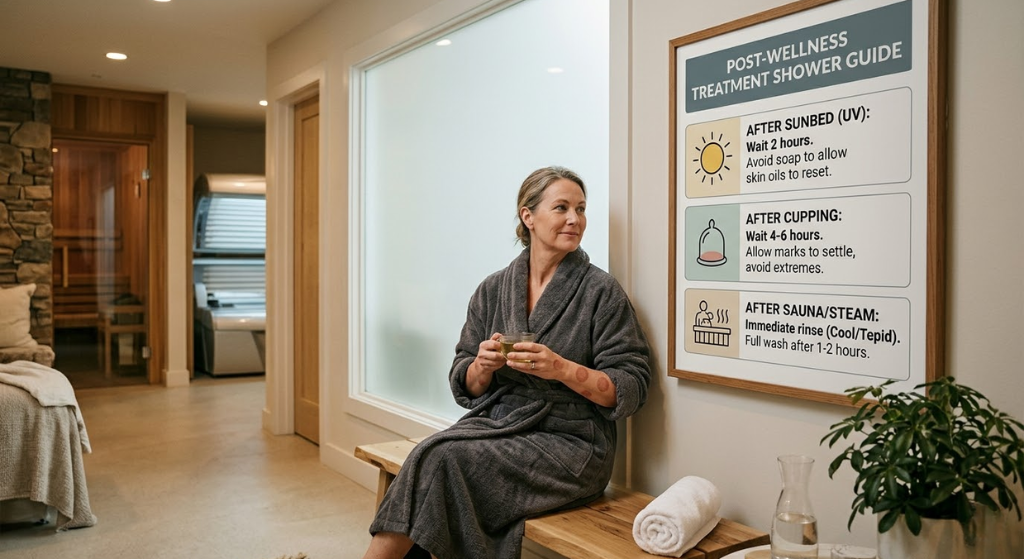
Three very different wellness treatments — cupping therapy, sunbed tanning, and sauna sessions — share a common aftermath question: when can I shower? The answers are genuinely different for each, and the reasons behind each wait are equally different. Getting the timing wrong costs you either the benefits of the treatment (showering a spray-tan enhancer before it develops), the health of your skin (showering aggressively over open cupping marks), or the therapeutic value of the cool-down period (jumping into a hot shower straight from a sauna).
This guide covers all three in exhaustive detail — the exact recommended timings, the physiological science behind each recommendation, what happens if you shower too soon, and the complete aftercare protocol that maximises each treatment’s results.
All Three at a Glance
| Treatment | Minimum Wait | Recommended Wait | Avoid Longer | Key Reason |
|---|---|---|---|---|
| Cupping (dry) | 3–4 hours | 6–24 hours | Hot showers: 24–48 hrs | Open pores, sensitive skin, broken vessels |
| Cupping (wet) | 24–48 hours | 48 hours minimum | Any shower: 24–48 hrs | Open skin cuts — infection risk |
| Sunbed (no lotion) | 30 min – 2 hrs | 2–3 hours | Hot showers shorten tan life | Melanin still developing; skin warm |
| Sunbed (with DHA lotion) | 2–4 hours | 4–6 hours | Avoid hot/long showers ongoing | DHA needs time to bind with skin proteins |
| Sauna (any type) | 5–15 min cooldown | 10–15 min, then shower | Don’t delay too long — shower within 30 min | Need to stabilise temperature before showering |
| Sauna (cold plunge variant) | Immediately after plunge | Shower within 15 min of finishing plunge | — | Remove sweat and toxins promptly |
How Long Should You Wait to Shower After Cupping?
Most cupping therapists recommend waiting at least 4–6 hours before showering after a dry cupping session. The gold standard recommendation from specialist practitioners is 24 hours. For wet cupping (where small incisions are made), wait at least 48 hours and only shower on medical advice from your practitioner.
The answer to this question has a genuine range in the published guidance — from “3 hours minimum” to “24–48 hours recommended” — and the variance isn’t inconsistency, it reflects the different intensity levels of cupping treatments. A gentle 15-minute back cupping session with light marks needs a shorter recovery window than an intensive full-body session with deep, dark circular bruising.
Here is how to apply the guidance accurately to your specific situation:
- Light marks, minimal redness, standard session: Wait 4–6 hours for a brief lukewarm shower. Hot showers should be avoided for 24 hours.
- Dark marks, significant bruising circles, sensitive skin: Wait the full 24 hours before any shower. The darker the marks, the more significant the tissue response, and the more vulnerable the skin remains.
- Wet cupping (small skin incisions made): 24–48 hours minimum with no direct water on the treated areas. This is not negotiable — the incision sites carry real infection risk from water exposure.
- If your therapist gives specific instructions: Follow those instructions over all general guidance. Your practitioner has seen your specific treatment and skin response.
Why You Shouldn’t Shower Immediately After Cupping
The reasoning behind every post-cupping shower restriction comes from the same physiological event: the suction created by cupping cups produces a state of temporary skin vulnerability that water — particularly hot water — can worsen in multiple ways simultaneously.
🔬 What Cupping Actually Does to Your Skin
Cupping creates negative pressure — the cup’s suction pulls the skin upward, stretching the tissue and rupturing superficial capillaries in the process. This is the mechanism behind the distinctive circular marks: pooled blood from broken superficial blood vessels beneath the skin. Simultaneously, the suction forcibly dilates the pores in the treated area, creating temporary openings in the skin’s barrier function. The result is skin that looks bruised, feels sensitive, has compromised pores, and has lost some of its natural protective oils through the suction and friction of cup removal.
💧 Open Pores = Infection Pathway
The suction from cupping dilates pores significantly in the treated areas. These pores remain open and more permeable than normal for several hours post-treatment. Showering exposes these open pores to tap water that contains chlorine, fluoride, and microorganisms. Even in well-maintained municipal water supplies, when your pores are open, chlorine water can feel like an acute sunburn on the skin — the chemical irritation to dilated pores is immediate and uncomfortable. More importantly, the pathway for bacteria and chemicals into the skin is meaningfully wider than under normal conditions.
🌡️ Temperature Sensitivity
Post-cupping skin is genuinely thermally sensitised — both hot and cold extremes cause discomfort and can disrupt the healing process. After cupping therapy, you should wait at least 24 to 48 hours before taking a shower. Avoid temperatures above 100°F (38°C) or below 68°F (20°C) to prevent shocking your sensitised skin since it can disrupt the healing process. Hot water causes vasodilation in already-inflamed tissue, intensifying swelling and bruising. Cold water causes sudden vasoconstriction that can trigger discomfort and restrict the beneficial circulation improvements cupping was designed to create.
🫀 Interrupted Blood Flow Benefits
Cupping’s primary therapeutic mechanism is the promotion of localised blood circulation in treated areas. The disruption of superficial capillaries followed by the body’s healing response — sending immune cells, fresh oxygenated blood, and cellular repair resources to the marked areas — is the therapeutic event. This healing circulation continues for hours after the session. Hot water and aggressive showering interrupt this process by causing competing vasodilation and washing away natural oils that support skin repair.
🛢️ Natural Oil Loss
Cupping can remove some of the natural oils that protect your skin. Showering immediately can further wash away these oils and result in dryness and irritation to your body. The suction of cupping strips the protective sebum layer from treated skin. Showering with soap immediately after removes the remaining oils from surrounding skin too, leaving the compromised cupped areas without any protective lipid barrier during the most vulnerable hours of healing.
Dry Cupping vs Wet Cupping: Different Rules Apply
The vast majority of cupping sessions performed in Western wellness and sports medicine settings are dry cupping — suction cups applied to intact skin with no cutting. The guidance above (4–6 hours minimum, 24 hours preferred) applies to dry cupping.
Wet cupping (known as hijama in Islamic traditional medicine) involves making small superficial cuts in the skin before applying the cup, drawing blood to the surface as part of the intended therapeutic mechanism. This fundamentally changes the shower timing because wet cupping creates actual open wounds. Showering after cupping therapy is typically not recommended because the suction from cupping opens up pores on your body. If you take a shower right after the cupping therapy, these open pores may get exposed to various harmful chemicals and bacteria, which may cause severe infections to your body. For wet cupping, this infection risk is significantly higher — water entering actual cut wounds rather than merely dilated pores carries real clinical risk. A minimum of 24–48 hours is a hard minimum, with your practitioner’s specific wound care instructions taking precedence over any general guidance.
🚨 Wet Cupping: Treat the Marks Like Wounds
After wet cupping, the treatment sites are open wounds that need the same care as any minor laceration. Keep them covered and dry for at least 24–48 hours. When you do shower, cover the treated areas with waterproof wound dressings. Do not scrub, exfoliate, or apply fragrant products to wet cupping sites until they have fully healed (typically 3–7 days). If you notice increasing redness, swelling, warmth, or discharge beyond what your practitioner described as normal, seek medical evaluation.
The Safe Post-Cupping Shower: Step-by-Step Protocol
When the wait time has elapsed and you’re ready for your first shower after cupping, how you shower matters almost as much as when you shower. The treated skin remains sensitised for 24–48 hours and deserves a gentler approach than your normal routine.
- Check the marks before entering the shower Visually assess the cupping marks. If they are still very dark, raised, warm to the touch, or the surrounding skin looks inflamed, extend the wait. The marks fading from deep purple toward reddish-brown indicates the tissue is healing and the shower timing is more forgiving.
- Set water to lukewarm — not hot, not cold Avoid temperatures above 100°F (38°C) or below 68°F (20°C) to prevent shocking your sensitised skin. A temperature that feels neutral and comfortable — approximately 95–100°F (35–38°C) — is ideal. If you’re unsure, err cooler rather than hotter. The marks will tell you if you’ve misjudged — discomfort or increased skin redness is a sign to cool the water down.
- Avoid directing the shower head at treated areas Let water flow gently over marked areas rather than spraying the shower head directly at them. The water pressure of a standard shower head hitting freshly cupped skin feels more intense than it does on normal skin, and the direct pressure can be uncomfortable on bruised tissue.
- Use fragrance-free, gentle cleanser only on treated areas Standard shower gel contains fragrance compounds, surfactants, and sometimes alcohol that all irritate sensitised post-cupping skin. Choose gentle, unscented soap. Avoid scrubbing the cupped areas. Use your fingertips to lightly cleanse around the marks rather than over them.
- No loofahs, washcloths, or exfoliation on treated areas Mechanical exfoliation on bruised, sensitised skin with dilated pores is both painful and counterproductive. Any scrubbing motion on cupping marks can reactivate the capillary disruption, worsen bruising, and cause additional skin irritation. Give treated areas a minimum of 48–72 hours before any exfoliation.
- Pat dry — do not rub Use a clean, soft towel. Pat gently over marked areas rather than rubbing — the friction of rubbing a towel over bruised cupping marks is significant and uncomfortable, and mechanical friction on the healing tissue is counter-therapeutic.
- Apply aftercare product immediately after drying Coconut oil, aloe vera gel (alcohol-free), or your practitioner’s recommended aftercare product should be applied to treated areas while skin is still slightly warm and pores are somewhat open — this is when topical products absorb most effectively. Natural oils like coconut oil, aloe vera, or vitamin E cream can soothe the skin, helping it heal faster while reducing any itchiness or irritation.
Complete Cupping Aftercare: The 48-Hour Protocol
The shower restriction is just one part of a broader post-cupping protocol that, when followed, significantly improves both recovery speed and the durability of the treatment’s therapeutic effects.
💧 Hydrate Aggressively
Following a cupping session, you should make sure to drink a lot of water for the next 48 hours. Proper hydration enables the body to continue flushing toxins and other stagnations (cellular waste products) out of the body, further enhancing the benefits of the cupping session. Aim for at least 2–3 litres of water in the 48 hours following treatment — more if you exercised before your session or in warm weather.
😴 Rest and Sleep
Other cupping aftercare methods include extra rest and hydration, loose-fitting clothes, arnica cream, and a hot compress. Many people feel notably fatigued for several hours after cupping — this is a normal response to the body’s localised healing activation. Prioritise sleep the night of your treatment; the body’s primary cellular repair processes occur during sleep, which is why adequate rest accelerates mark fading.
👕 Loose Clothing Over Marks
Tight clothing pressing against cupping marks causes discomfort and friction on tender tissue. Avoid wearing tight or constrictive clothing over the cupped areas, as this can increase pressure and cause discomfort. Loose and breathable clothing can help provide comfort and allow the skin to breathe. Cotton is ideal — non-irritating, breathable, and doesn’t retain heat that would further sensitise the already-warm marked areas.
🚫 No Exercise for 24–48 Hours
Refrain from engaging in intense physical activities or exercises immediately after cupping. The suction from the cups may cause temporary bruising or tenderness, and vigorous movements could worsen the marks or slow down the healing process. Light walking or gentle stretching after 24 hours is acceptable. Contact sports, weight training, and anything that causes sweating should be avoided for 48 hours.
☀️ Avoid Sun Exposure
Skin treated by cupping is more sensitive to sunlight and may burn more easily. Direct exposure can worsen the marks and increase the risk of skin irritation, so covering up or staying indoors is advisable. UV radiation on freshly cupped skin can cause hyperpigmentation around the marks — a darkening that takes weeks to fade rather than the normal 7–10 days.
🍷 No Alcohol or Caffeine
After cupping, it’s recommended to avoid alcohol and excessive caffeine consumption. Both substances can cause dehydration, and adequate hydration is essential for the body to flush out toxins and support the healing process. Alcohol specifically causes vasodilation that intensifies bruise coloration and slows the immune response that clears the broken-capillary marks.
If you’re curious about how cupping interacts with other water-based therapies, it’s worth noting that warm showers are documented to improve sleep quality — which is relevant given that sleep is a primary recovery mechanism after cupping. You can leverage your first post-cupping shower (once the wait time has elapsed) as a gentle warm, sleep-enhancing ritual the evening of your treatment.
How to Fade Cupping Marks Faster
Cupping marks — those distinctive circles ranging from pale pink to deep purple-red — are the most visually striking aspect of cupping therapy and often the primary concern of first-time patients. Cupping marks typically last anywhere from a few days to two weeks, depending on the individual’s skin type and the intensity of the cupping treatment. These marks usually fade gradually as the body reabsorbs the localized bruising caused by the suction.
The colour of the marks on the day of treatment provides information about your body’s condition and response: light pink or red marks indicate good circulation and typically fade in 1–3 days; dark purple or near-black marks indicate significant stagnation or poor circulation in that area and may take 10–14 days to fully fade.
- Arnica gel or cream: If your marks are particularly dark or you’re experiencing back pain or soreness, try using arnica gel, cream, or oil (or another pain-relieving cream). Arnica (Arnica montana) is a well-established remedy for bruise clearance that accelerates the reabsorption of pooled blood. Apply gently to the marks 2–3 times daily, always after the shower wait period has elapsed.
- Gentle heat application: You can also use a hot water bottle or heating pad to improve circulation and relax the muscles in the area. Gentle heat (not direct hot water on the marks, but a covered heat pack) improves circulation to the marked areas, accelerating the immune cell activity that clears the bruising.
- Hydration: Systemic hydration supports lymphatic function, which is the primary mechanism by which the body reabsorbs the blood products pooled under cupping marks.
- Gentle massage around (not over) the marks: Light massage around the perimeter of cupping marks can improve circulation in the surrounding tissue, helping draw fresh blood into the area. Never massage directly over fresh marks — this causes pain and can worsen capillary damage.
How Long Should You Wait to Shower After a Sunbed?
If you used no tanning lotion: you can shower within 30–60 minutes. If you used a tanning accelerator or bronzer lotion without DHA: wait 2–3 hours. If you used a lotion containing DHA (self-tanning component): wait at least 4–6 hours. The UV tan itself cannot be washed off — the wait is entirely about the products.
The sunbed shower question is frequently misunderstood because it conflates two entirely different things: the UV-induced melanin tan and the effects of any tanning product you applied. These require completely separate treatment.
The right timing depends on whether you used a tanning lotion during your session. If you apply tanning lotion, wait at least 2 to 4 hours before showering. This gives the lotion enough time to absorb and support full tan development. If no lotion was used, you can shower right away.
To be precise: you do not have to wait to shower. However, bronzers that contain DHA are best when left on for at least 4 hours before showering. This is the most accurate way to frame the sunbed shower question: the wait is entirely product-dependent, not UV-dependent.
The Melanin Science: Why Your Tan Keeps Developing After You Leave
Understanding how UV tanning works reveals why the shower timing question has different answers for different situations — and why the UV tan genuinely cannot be washed away.
🔬 Melanogenesis: The Tanning Process
During a tanning session, your skin undergoes a process known as melanogenesis, where the production of melanin is stimulated, causing your skin to darken. Waiting for a couple of hours allows this process to stabilise and ensures you don’t accidentally wash away the tanning product while it’s still acting, giving you better and longer-lasting results. Melanin is produced by melanocytes in the basal layer of the epidermis — entirely beneath the surface of the skin. UV radiation triggers melanocytes to produce more melanin and transport it to surrounding keratinocytes, which gradually darken the visible skin surface. This process continues for 2–6 hours after UV exposure ends, which is why many people look noticeably darker the morning after a session than they did walking out of the salon.
The key implication: showering immediately after a UV-only tanning session will not wash away the developing tan. The tan is occurring entirely within the skin, not on the surface. Melanin is not water-soluble and cannot be rinsed off. The only consequence of an early post-UV shower is potentially stripping natural skin oils, which can cause faster skin-cell turnover and therefore faster tan fading over the following days.
After a sunbed session, melanin production continues for several hours. Therefore, waiting before showering allows your skin to fully absorb the UV rays and develop a deeper tan. This patience ensures that your tan will be richer and longer-lasting.
With vs Without Tanning Lotion: Completely Different Rules
| Product Type | Shower Wait | Why | What Happens if You Shower Early |
|---|---|---|---|
| No tanning product used | 30–60 minutes | UV tan is under the skin; only reason to wait is skin temperature | Minimal effect on tan; slightly faster fading from oil loss |
| Tanning accelerator (no DHA) | 2–3 hours | Tyrosine-based accelerators continue boosting melanin production | Slightly reduced melanin stimulation; accelerator washed away early |
| Cosmetic bronzer only | 2 hours | Bronzer gives instant colour that washes off; UV tan still developing | Bronzer washes off early revealing lighter-than-expected appearance |
| DHA-containing lotion / bronzer | 4–6 hours min | DHA reacts with skin amino acids over 4–6 hours to produce colour | Patchy, lighter, uneven result — reaction interrupted mid-process |
| Express DHA lotion | 1–3 hours (per instructions) | Higher concentration DHA reacts faster — follow label exactly | Too-light result if showered early; possible over-dark if showered very late |
💡 How DHA Works — And Why It Can’t Be Rushed
DHA (dihydroxyacetone) is a colourless sugar derived from fermentation that reacts with amino acids in the outermost layer of your skin (the stratum corneum) through the Maillard reaction — the same chemical process that browns bread and caramelises sugar. This reaction is entirely independent of UV radiation; it’s a purely chemical reaction with your skin proteins that takes a fixed amount of time to complete regardless of how much you want to shower. Washing it off early doesn’t just reduce the intensity of the reaction — it produces an uneven result because areas where the reaction progressed further are darker than areas where it was interrupted early, creating a patchy appearance that cannot be corrected.
The Post-Sunbed Shower Protocol: Protecting and Extending Your Tan
- Allow skin to cool before entering the shower Your skin has just had a dose of UV rays and needs some care. Give your skin some time to cool down naturally. We recommend waiting at least 30 minutes to an hour after your tanning session before you hit the shower. The skin is elevated in temperature immediately post-sunbed; a shower while the skin is still warm opens pores further and increases product loss.
- Use lukewarm water — never hot Hot water can dry and strip away natural oils, making your tan fade faster. Stick with lukewarm water to keep your skin’s moisture intact. The skin’s natural oils are the primary moisture barrier that slows exfoliation of the tanned outer skin cells. Hot water dissolves and strips these oils far more aggressively than cool or lukewarm water, directly accelerating tan fade.
- Choose mild, moisturising cleanser — no exfoliating products Avoid harsh soaps and scrubs right after tanning. Instead, use a mild, hydrating body wash to prevent dryness and peeling, which can dull your tan. Exfoliation removes the stratum corneum cells where both DHA colour and UV-stimulated melanin live. Even when scrubbing feels good post-tanning, any mechanical or chemical exfoliation in the first 48 hours post-session significantly shortens tan duration.
- Pat dry — do not rub Vigorous towel drying can be too abrasive. Patting your skin dry is gentler and helps avoid exfoliating too much. Rubbing a towel over freshly tanned skin is a form of manual exfoliation. Pat gently, let skin air-dry for a minute, then pat again.
- Moisturise immediately while skin is still slightly damp Use a quality, non-alcoholic hydrator to lock in moisture and keep your skin soft and radiant. Hydrated skin helps your tan last longer and look more vibrant. Apply a tan-safe, alcohol-free moisturiser to damp skin within 2–3 minutes of drying. The slightly damp skin surface allows the moisturiser to penetrate more effectively and form a seal over the skin’s natural oils before they fully evaporate.
- Avoid pool, ocean, or spa water the same day It is best to avoid swimming the same day. Chlorine and saltwater can dry out your skin and cause your tan to fade faster. This applies most strongly to DHA-based tans where the colour is in the outer skin layer, but UV tans also fade faster with repeated chlorine exposure.
Post-Sunbed Aftercare: Making Your Tan Last Longer
💧 Moisturise Daily (Most Important)
A tan lives in the outer skin cells. Those cells exfoliate on a natural cycle of approximately 14–28 days. Keeping them hydrated slows that exfoliation cycle, directly extending how long your tan appears. Dry, flaking skin loses the tan within days; well-moisturised skin can maintain it for 2–3 weeks. Apply moisturiser daily, particularly in the 24 hours after each shower.
🚿 Short, Cool Showers Going Forward
Skip Hot Baths and Saunas: High temperatures can open your pores and make it easier for your tan to wash away. Every hot shower you take after tanning accelerates skin oil loss and epidermal exfoliation. Shortening shower duration and lowering the temperature are the two single most effective daily habits for extending tan longevity.
🧴 Tan Extender Products
Tan extenders — body lotions formulated with DHA at low concentrations plus intense moisturisers — applied 2–3 times per week top up the colour in the upper skin layers between sessions, extending the life of the UV tan and filling in any areas where colour has started to fade unevenly.
👗 Loose Clothing Post-Session
Avoid Tight Clothing: Right after tanning, your skin is more sensitive, and tight clothing can create friction, leading to uneven fading or even irritation. Opt for loose, comfortable clothes to let your tan settle evenly. This applies most to DHA-enhanced sessions in the first 4–6 hours before the DHA reaction completes.
For those combining sunbed sessions with steam showers for skin benefit, note that sauna and steam use after tanning significantly accelerates exfoliation — it’s one of the faster ways to fade a tan. If you use our steam shower generator or visit a steam room regularly, schedule those sessions before tanning sessions, not after. Similarly, a pre-workout shower on tanning days is better timed before the session rather than immediately after.
How Long to Wait to Shower After a Sauna?
Wait 5–15 minutes after leaving the sauna to allow your body temperature and heart rate to stabilise, then shower. Unlike cupping or sunbed sessions where you wait before showering, the sauna recommendation is actually to shower promptly — the key is the brief cooldown period before you step into the water, not a prolonged delay.
The sauna shower question is the inverse of the cupping and sunbed questions. For those treatments, the concern is showering too soon. For sauna, the concern is two-sided: not showering when you’re still overheated (which can cause dizziness or cardiovascular stress), but also not waiting so long that the sweat and toxins released during the session are reabsorbed by the open-pored, still-sweating skin.
Take 5 to 15 minutes to relax, sip some water, and let your body adjust before moving to the shower. Showering too soon after leaving the sauna can interrupt the natural rhythm your body follows to detoxify and restore balance. The optimal window is: cool down for 5–15 minutes after exiting, then shower within the following 15–30 minutes to clean away the sweat, toxins, and impurities that have been expelled from the pores during the heat session.
Most people shower within 15 to 30 minutes after a session to remove sweat and impurities. How long to wait to shower after sauna depends on skin sensitivity and personal preference.
The Body Temperature Science: Why the Cooldown Period Matters
A traditional sauna operates at 80–100°C (176–212°F), though the air temperature the body experiences is lower than this due to the low humidity. An infrared sauna typically operates at 50–60°C (122–140°F) with similar physiological effects at lower ambient temperatures. In both cases, the body undergoes significant thermoregulatory changes during the session that need to resolve before a shower is safe and beneficial.
❤️ Cardiovascular State
During sauna use, heart rate rises to 100–150 beats per minute — comparable to moderate exercise. Blood vessels are dilated throughout the body, blood pressure is lowered, and cardiac output is elevated. Stepping directly from a sauna into a shower — particularly a cold shower — causes rapid vasoconstriction that can produce sudden blood pressure swings, dizziness, and in people with cardiovascular conditions, potentially dangerous hemodynamic instability. It is not recommended to shower immediately after leaving the sauna. Your body is still sweating and trying to regulate its temperature. A sudden change in temperature from showering can affect your overall health.
🌡️ Core Temperature Regulation
Your core body temperature rises 1–2°C during a sauna session. The body’s thermoregulation mechanisms — sweating, vasodilation, increased respiratory rate — are actively working to prevent overheating. A sudden cold shower before these mechanisms have wound down creates a competing signal that forces an abrupt cardiovascular response. The 5–15 minute cooldown allows your core temperature to begin normalising and your cardiovascular system to decelerate toward resting state before the additional stimulus of cold water.
🧫 Sweat and Toxin Reabsorption Risk
It has been proven in multiple research studies that toxins are in fact secreted when we sweat in a sauna. This sweat can contain heavy metals and other harmful chemicals. Because of this — we want to shower quickly, so that these toxins are not reabsorbed by our skin. The post-sauna period is a window where the sweat — laden with excreted compounds — sits on skin with open, dilated pores. Prompt showering closes this window. This is the reason the sauna shower guidance says “cool down briefly, then shower promptly” rather than “wait as long as possible.”
🫁 Continued Sweating
After a sauna, your body undergoes a natural series of changes. During a sauna session, your body temperature rises significantly. Most people continue sweating for 5–15 minutes after leaving the sauna as the body continues to dump excess heat. Showering while still actively sweating is less effective at cleaning the skin (new sweat immediately coats the shower-rinsed surface) and the contrast between shower temperature and body temperature is larger, amplifying the cardiovascular response. The cooldown period allows sweating to subside naturally before the shower begins.
Cold Shower vs Warm Shower After Sauna: Which Is Better?
The debate between cold and warm post-sauna showers is one of the most discussed topics in sauna culture, with Finnish tradition strongly favouring cold water and modern Western wellness guidance often recommending a more moderate approach. Both have genuine physiological benefits — the optimal choice depends on your health status, goals, and personal tolerance.
| Cold Shower (below 68°F / 20°C) | Lukewarm Shower (80–95°F / 27–35°C) | Warm Shower (95–105°F / 35–40°C) | |
|---|---|---|---|
| Pore closing effect | Excellent — rapid vasoconstriction | Moderate | Minimal — pores remain open |
| Circulation benefit | Strong — contrast therapy effect | Moderate | Moderate — continues vasodilation |
| Cardiovascular stress | Higher — not ideal immediately post-sauna | Low | Lowest |
| Immune stimulation | Strong — white blood cell production | Mild | Minimal |
| Recommended for | Healthy individuals after full cooldown | Most users — best balance of benefit and safety | First-timers, sensitive skin, elderly, medical conditions |
| Nordic tradition | Traditional preferred method | Acceptable | Generally not part of traditional sauna culture |
💡 The Contrast Therapy Protocol (Advanced)
The full traditional Nordic sauna experience alternates between heat and cold in cycles: 15–20 minutes in the sauna, cold shower or cold plunge for 30–120 seconds, brief rest of 5–10 minutes, then optionally another sauna round. This contrast cycling — known as contrast hydrotherapy — produces some of the strongest cardiovascular and immune stimulation benefits of sauna use. The hot-to-cold transition encourages blood vessels to constrict and dilate, exercising your cardiovascular system to improve circulation. Shockingly cold water stimulates the production of white blood cells, which strengthens your body’s natural defenses. If you have heart disease, hypertension, or any cardiovascular condition, always consult your doctor before attempting contrast therapy. If you want to explore the full cold vs hot shower debate beyond the sauna context, we cover the complete science there.
The Complete Post-Sauna Shower Protocol
- Exit the sauna and find a cool, ventilated place to sit When you’re ready to end your sauna session, simply exit the sauna and find a cool place to sit for about 10-15 minutes. Don’t rush to towel off immediately; instead, allow the air to naturally evaporate the moisture from your skin. Avoid lying down immediately — sitting upright maintains blood pressure stability as your body transitions from sauna to ambient temperature.
- Drink water during the cooldown period A typical 15–20 minute sauna session produces 0.5–1 litre of sweat. Begin rehydrating immediately after exiting. Water at room temperature is absorbed most efficiently. Cold water is fine — the old concern that cold water causes stomach cramps during or after exercise is not supported by current research.
- Wait 5–15 minutes until sweating subsides You’ll feel when you’ve stopped actively sweating and your heart rate has returned toward resting normal. This is the signal that your thermoregulatory system has wound down enough for a safe shower. Most people hit this point in 8–12 minutes.
- Begin the shower with lukewarm water Begin with a tepid shower, and slowly increase the temperature so that you feel the water to be warm. Starting lukewarm — regardless of whether you plan to finish with a cold rinse — avoids the cardiovascular shock of immediate cold exposure and gives your skin time to respond to the temperature change gradually.
- Cleanse thoroughly but gently Use a gentle exfoliant that has an oil base. This will prevent the skin from drying out. You will gently rub the exfoliant over your body in circular motions. Then rinse your skin clean. Post-sauna is an ideal time for gentle exfoliation — the heat has softened the outer skin layer and the pores are still open and receptive to thorough cleansing. Use a gentle, oil-based cleanser rather than a harsh antibacterial soap that would strip the skin too aggressively.
- Finish with a cool or cold rinse For an invigorating experience, try a cool rinse. This can boost your immune system, help with detoxification, and improve blood circulation. The colder temperature will help to close your open pores and prevent outside substances from getting under your skin. Even 30 seconds of cool water at the end of a post-sauna shower meaningfully closes pores and activates the contrast therapy benefit.
- Apply natural moisturiser immediately after drying The goal of your post-sauna skin care routine is to cleanse, soothe, and protect. By following these steps, you’ll help your skin recover from the intense heat and sweating of the sauna session, leaving it clean, moisturized, and ready to face the day. Sauna heat dehydrates the outer skin layers; moisturiser applied to still-warm, slightly damp skin after the shower seals in residual moisture and replenishes the lipid barrier stripped by heat and sweat.
Post-Sauna Aftercare: Maximising the Benefits
💧 Rehydrate Aggressively
Drink 500ml–1 litre of water or electrolyte drink within the first hour post-sauna. The sweating during a sauna session depletes not just water but electrolytes — sodium, potassium, and magnesium — that affect muscle function and recovery. A sports drink, coconut water, or electrolyte tablet in water is more effective for recovery than water alone after intense sauna sessions.
🍽️ Eat a Light Meal or Snack
The sauna accelerates metabolism and the post-session period is a time when the body is primed for nutrient absorption. A light meal with protein and complex carbohydrates within an hour of your post-sauna shower supports muscle recovery and replenishes the glycogen depleted during the thermogenic stress. Avoid heavy, processed, or high-fat meals that slow digestion during an active recovery period.
😴 Rest or Light Activity Only
Avoid alcohol, heavy meals, or high-intensity exercise immediately before or after sauna use, and consult a doctor if you have health concerns or are new to sauna routines. The post-sauna body is in a parasympathetic (rest-and-restore) state — capitalise on this by resting rather than immediately returning to intense activity. Evening sauna sessions leveraged with a warm shower afterward have documented sleep quality improvements. See our guide on warm showers and sleep for the full science.
Traditional Sauna vs Infrared Sauna: Does the Type Change the Shower Timing?
The two main sauna types available in home and wellness centre settings — traditional Finnish-style (high heat, low humidity, with occasional steam from water poured on heated rocks called löyly) and infrared (lower temperature, deeper tissue heating) — have slightly different post-session states that affect shower timing.
🔥 Traditional Sauna (80–100°C)
The higher ambient temperature produces more intense sweating and a more dramatic cardiovascular response. The 10–15 minute cooldown before showering is more important after a traditional sauna because the physiological changes are more pronounced. Traditional sauna culture (Finnish, Russian banya, Turkish hammam) almost universally pairs the heat experience with cold water — either a cold plunge, a cold shower, or rolling in snow — as part of the intended therapeutic cycle.
💡 Infrared Sauna (45–60°C)
It is essential to shower after an infrared sauna session, and it is generally recommended to shower within 15–20 minutes after the session has ended. This helps to remove any sweat and impurities released from the body during the sauna session, and it also helps to cool down the body. Infrared saunas produce intense sweating at lower ambient temperatures, meaning the cardiovascular response is somewhat less extreme — a shorter 5–10 minute cooldown may be sufficient before showering. The imperative to shower promptly is equally important given that infrared saunas are marketed specifically for their detoxification benefits through sweating, and showering quickly removes those excreted compounds from the skin surface.
Those who combine sauna use with regular steam showers should note that a steam shower generator in a residential bathroom produces a genuinely therapeutic steam environment without the extreme temperatures of a traditional sauna. If you’re interested in adding steam therapy to your shower — as a complement to separate sauna sessions or as an alternative — our best steam shower generator guide covers the full range of home steam systems and how they compare.
Full Comparison: Cupping vs Sunbed vs Sauna — Shower Timing and Aftercare
| Factor | Cupping (Dry) | Sunbed (DHA Lotion) | Sauna |
|---|---|---|---|
| Wait before showering | 4–6 hrs min; 24 hrs preferred | 4–6 hrs (DHA); 30–60 min (no lotion) | 5–15 min cooldown, then shower promptly |
| Why you wait | Open pores, broken capillaries, skin vulnerability | DHA reaction needs to complete on skin | Allow heart rate and temperature to stabilise |
| Risk of showering too soon | Infection, irritation, inflammation, disrupted healing | Patchy, uneven, lighter-than-expected tan | Dizziness, cardiovascular stress, or continued sweating in shower |
| Water temperature | Lukewarm only (68–100°F) | Lukewarm to cool — avoid hot | Lukewarm to cool; cold rinse beneficial at end |
| Soap/products | Fragrance-free, gentle only on treated areas | Mild, moisturising; no exfoliants for 48 hrs | Gentle oil-based; gentle exfoliation is fine |
| Avoid after treatment | Exercise, alcohol, sun, cold, heat extremes (24–48 hrs) | Hot baths, chlorine, exfoliation, tight clothing | Alcohol, heavy meals, intense exercise (same day) |
| Recommended post-shower action | Arnica gel, natural moisturiser, rest | Tan-safe moisturiser while skin still damp | Moisturiser, electrolyte rehydration, rest |
| How long effects last | Therapeutic: days to weeks; Marks: 1–14 days | UV tan: 7–14 days; DHA colour: 5–10 days | Circulation and wellness benefits: hours to days |
Frequently Asked Questions
After cupping, it’s best to wait at least 4–6 hours before showering to allow the marks to settle and avoid any skin irritation. The stronger recommendation from specialist practitioners is 24 hours before any hot shower, with lukewarm water being the only acceptable temperature if you must shower sooner. For wet cupping with skin incisions, wait a minimum of 24–48 hours and keep the treated areas dry.
Not recommended, but if you must: wait at least 3 hours, use only lukewarm water (never hot or cold), skip soap on cupped areas, keep pressure low, and pat dry gently. The risk isn’t catastrophic for a brief, gentle lukewarm rinse after 3+ hours, but the therapeutic benefits of the session are better preserved with a longer wait. If you must bathe shortly after cupping, use temperate, filtered water.
If you used no tanning products: 30–60 minutes to allow skin to cool. If you used a standard tanning accelerator lotion: 2–3 hours. If your lotion contained DHA (a self-tanning active ingredient): 4–6 hours minimum. You do not have to wait to shower. However, bronzers that contain DHA are best when left on for at least 4 hours before showering.
A UV-induced tan cannot be washed off — it’s produced by melanin inside the skin cells, not on the surface. Showering won’t remove it. What an early shower can do is wash off any tanning lotion before it completes its work (particularly DHA-based products), and strip the skin’s natural oils, which accelerates the exfoliation of tanned skin cells and shortens how long the tan appears. Always moisturise after showering post-tanning.
Wait 5–15 minutes after leaving the sauna to allow your body temperature and heart rate to normalise, then shower within the next 15–30 minutes. Most people shower within 15 to 30 minutes after a session to remove sweat and impurities. Unlike cupping and sunbed sessions, the sauna guidance is to shower promptly after a brief cooldown — not to delay showering significantly.
Either works — they have different benefits. A cold shower closes pores rapidly, constricts blood vessels, boosts circulation through contrast, and stimulates the immune system. A lukewarm shower is gentler on the cardiovascular system and is recommended for anyone with heart conditions, hypertension, or who is new to sauna use. The compromise most experts recommend: start lukewarm and finish with a 30–60 second cold rinse to close pores. A cold shower after a sauna can help constrict blood vessels and improve circulation. It can also refresh you and reduce inflammation.
Cupping marks are the result of broken superficial capillaries and pooled blood beneath the skin surface — essentially a therapeutic bruise from the suction. The colour indicates the intensity of the treatment and the body’s response: light pink fades in 1–3 days; dark purple can take 10–14 days. Arnica gel, hydration, gentle warmth, and rest all accelerate fading. Cupping marks typically last anywhere from a few days to two weeks, depending on the individual’s skin type and the intensity of the cupping treatment.
Not recommended on the same day. After cupping: avoid saunas and hot baths for at least 24 hours — the heat exposure is contraindicated for fresh cupping marks and open pores. After a sunbed: a sauna’s heat and sweating will open pores and accelerate exfoliation, which directly shortens the tan’s lifespan. Separate these sessions by at least 48 hours and do sauna before sunbed if you plan both regularly.
Avoid temperatures above 100°F (38°C) or below 68°F (20°C) to prevent shocking your sensitised skin since it can disrupt the healing process. A “neutral” lukewarm temperature in the 90–98°F (32–37°C) range — water that feels neither warm nor cool to the touch, just neutral — is the safest choice for freshly cupped skin.
Slightly. Traditional saunas run hotter (80–100°C) and produce a more intense physiological response, making the 10–15 minute cooldown more important. Infrared saunas operate at lower temperatures (45–60°C) with a somewhat less dramatic cardiovascular response, so a 5–10 minute cooldown may be sufficient. It is generally recommended to shower within 15–20 minutes after an infrared sauna session has ended. For both types, shower promptly after the cooldown to remove expelled sweat and toxins.
The Three-Treatment Summary
Each of these three treatments creates a specific post-session skin state that shapes its shower recommendation. Cupping opens pores and bruises capillaries, requiring the longest protection window (4–24 hours) and the most careful shower technique. Sunbeds leave the UV tan safely inside the skin regardless of showering, but require a wait for any DHA-containing products to complete their surface reaction (4–6 hours). Saunas are the exception — they require not a long delay but a brief cooldown (5–15 minutes) followed by a prompt shower to remove expelled sweat and toxins before they’re reabsorbed.
In each case, the temperature of your shower matters. Lukewarm is the universal safe choice for post-treatment skin that has been stressed, sensitised, or heated. Hot water is the universal wrong choice — it exacerbates inflammation after cupping, strips natural skin oils after tanning, and adds thermal stress to an already-heated body after sauna. When in doubt: lukewarm, gentle, brief, and always followed by a quality moisturiser.
Cold vs Hot Shower: Which Is Better? →