8 Best Rainfall Shower Systems for a Spa-Like Bathroom Experience
Transforming your daily shower from a mundane task into a luxurious retreat begins with choosing the right water delivery system. While many homeowners struggle with inadequate water pressure—often asking, why is my shower head pressure low?—the solution frequently lies in outdated plumbing fixtures. Upgrading to one of the best rainfall shower systems represents the most significant improvement you can make to your bathroom without undertaking a complete renovation.
Table of Contents
- What to Look for in a Rainfall Shower System
- Detailed Product Reviews
- Complete Installation Guide
- Cost Analysis & Budget Planning
- Technical Specifications Explained
- Bathroom Design Integration
- Maintenance & Troubleshooting
- Health & Wellness Benefits
- Comparison Charts & Buying Guide
- Frequently Asked Questions
What to Look for in a Rainfall Shower System: Comprehensive Buying Guide
Selecting the perfect rainfall shower system requires understanding both technical specifications and how they translate to real-world experience. Unlike traditional shower heads, rainfall systems often involve ceiling or high-wall mounting to simulate natural precipitation. Here’s an exhaustive breakdown of what truly matters:
Critical Technical Specifications
Valve Technology
Pressure-Balancing Valves: These prevent sudden temperature changes when other water fixtures are used in the house. If you’ve ever experienced scalding when someone flushes a toilet, you need this feature.
Thermostatic Valves: Allow precise temperature setting and maintain it consistently. Ideal for families with children or elderly users. If you’re wondering why your shower is not getting hot, the valve is often the primary suspect.
Digital Valves: Newer technology offering programmable settings, temperature memory, and even remote control functionality.
Material Quality & Construction
Brass Construction: Look for solid brass or copper alloy valve bodies. Brass contains natural antimicrobial properties and resists corrosion better than plastic alternatives.
Finish Durability: High-quality finishes include PVD (Physical Vapor Deposition) coatings that resist tarnishing, scratching, and corrosion. Matte black finishes typically have 5-10 layers of coating.
Internal Components: Ceramic disc cartridges last longer than rubber washers and provide smoother operation. Stainless steel springs and silicone seals outperform plastic alternatives.
Water Pressure & Flow Dynamics
Rain heads disperse water over a larger surface area (typically 8-12 inches diameter), which can reduce pressure perception. Look for these technologies:
- Air-Injection Technology: Mixes air with water droplets to create larger, more voluminous drops that feel more substantial.
- Pressure-Boosting Nozzles: Some systems include specialized nozzles that concentrate flow in certain patterns.
- Flow Restrictors: Most systems include removable flow restrictors to comply with water conservation laws while allowing adjustment.
Installation Requirements
Rough-in Dimensions: Standard valves require 2×4 or 2×6 stud spacing with specific measurement requirements from the finished wall.
Water Supply Lines: Most systems require 1/2″ supply lines, though some high-flow systems benefit from 3/4″ lines.
Ceiling Requirements: Ceiling-mounted systems need adequate joist spacing and may require additional structural support.
Electrical Considerations: Digital systems, LED features, or steam generators require proper GFCI-protected electrical outlets.
Flow Rate Considerations & Water Efficiency
Understanding flow rates is crucial for both performance and environmental consciousness:
| Flow Rate (GPM) | Water Usage (10-min shower) | Pressure Feel | Best For |
|---|---|---|---|
| 1.5 GPM (Standard Restrictor) | 15 gallons | Light to Moderate | Water conservation, low-pressure systems |
| 2.0 GPM | 20 gallons | Moderate | Most residential applications |
| 2.5 GPM | 25 gallons | Strong | High-pressure areas, luxury experience |
| 3.0+ GPM (Restrictor Removed) | 30+ gallons | Very Strong | Commercial feel, maximum luxury |
Finish Options & Maintenance Considerations
The finish affects both aesthetics and maintenance requirements:
| Finish Type | Durability | Hard Water Visibility | Maintenance Level | Best Cleaning Method |
|---|---|---|---|---|
| Chrome | Excellent | High (shows spots) | High | Microfiber cloth, vinegar solution |
| Brushed Nickel | Very Good | Medium | Medium | Mild soap, soft cloth |
| Matte Black | Good (if PVD coated) | Low | Low-Medium | Dry after each use, no abrasives |
| Oil-Rubbed Bronze | Good | Very Low | Low | Wipe with dry cloth |
| Polished Brass | Medium | Medium | High | Specialty brass cleaners |
For homes with hard water, consider investing in a water softener or using the best shower mold cleaners regularly to prevent mineral buildup that can affect both appearance and performance.
Detailed Product Reviews & Analysis
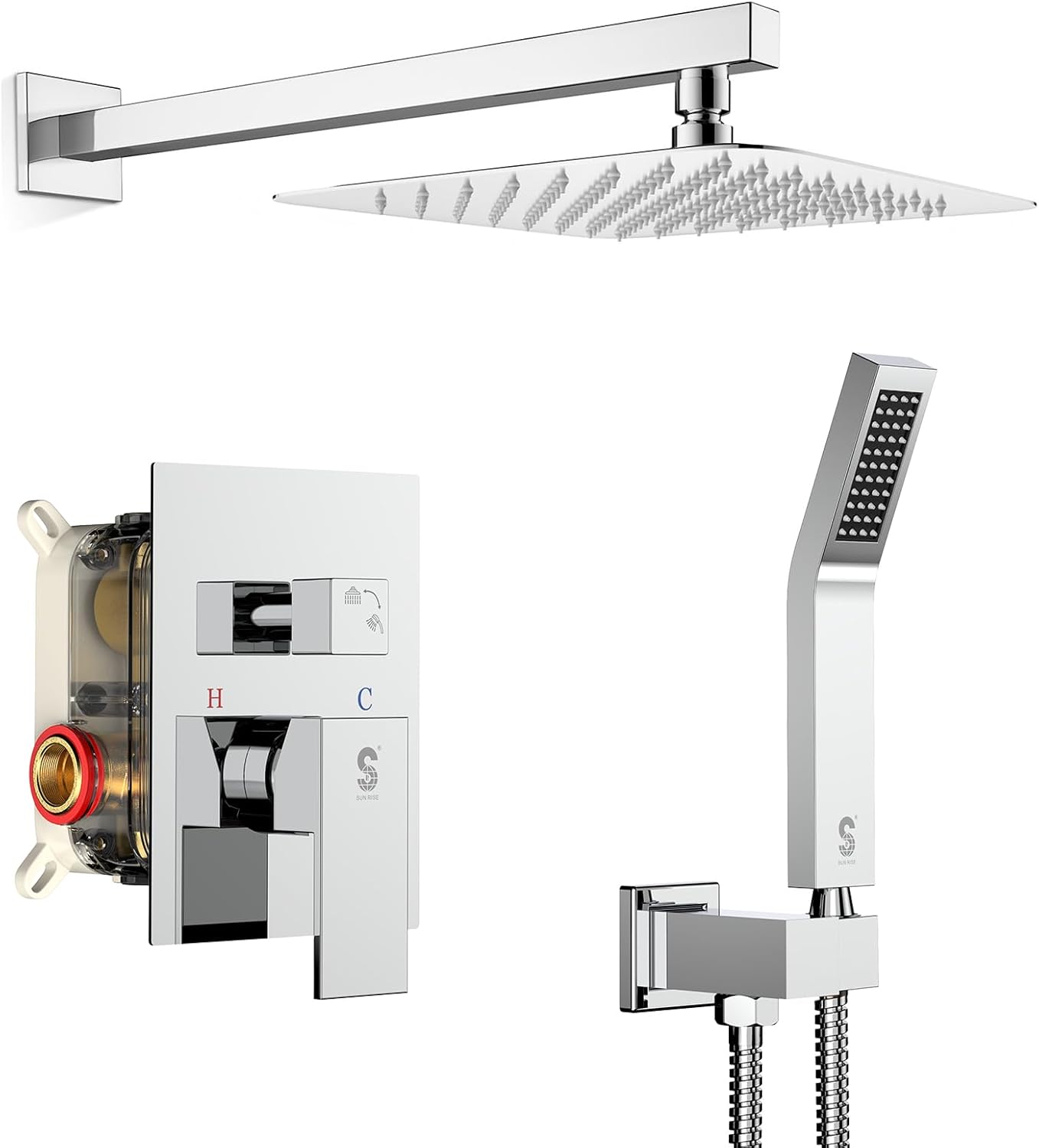
1. SR SUN RISE 12-Inch Ceiling Mount Rainfall Shower System
The SR SUN RISE system has emerged as the industry benchmark for mid-range luxury bathroom renovations. Its massive 12-inch rain head provides unparalleled full-body coverage, while the high-pressure L-style handheld wand addresses practical cleaning needs. This system represents the perfect balance between luxury and functionality.
Detailed Technical Analysis
Construction Quality: The valve body utilizes solid brass construction with a ten-layer matte black PVD finish that resists corrosion, tarnishing, and fingerprint marks. The ceramic disc cartridge ensures smooth temperature control and longevity exceeding 500,000 cycles.
Performance Specifications: The rain head features 200 individual nozzles with air-injection technology, creating droplets that are 30% larger than conventional systems. This creates the sensation of heavier rainfall without increasing water consumption. The handheld wand delivers 2.5 GPM with three settings: rainfall, massage, and jet stream.
Safety Features: The pressure-balancing valve includes a built-in anti-scald mechanism that automatically reduces water flow if cold water supply is interrupted. This is particularly important for homes with fluctuating water pressure or if you’re concerned about shower safety during thunderstorms.
Installation Considerations: Ceiling mounting requires minimum 8-foot ceilings and proper joist alignment. The system includes a universal rough-in plate that accommodates most standard valve configurations. Professional installation is recommended, with an average installation time of 3-4 hours for experienced plumbers.
Pros
- Solid brass valve construction with ceramic cartridge
- Ten-layer PVD matte black finish resistant to corrosion
- Air energy technology for enhanced pressure perception
- Comprehensive 5-year warranty covering all components
- Anti-scald protection meeting ASME A112.18.1 standards
- Universal compatibility with 1/2″ and 3/4″ supply lines
- Rubberized nozzles prevent mineral buildup
Cons
- Professional installation strongly recommended (adds $300-500 to cost)
- Not suitable for bathrooms with ceilings below 7.5 feet
- Heavy rain head requires additional ceiling reinforcement in some cases
- Limited finish options compared to premium brands
- May require water pressure booster in low-pressure areas
Long-Term Value Assessment
Over a 10-year period, the SR SUN RISE system demonstrates exceptional value retention. The brass construction ensures minimal degradation, and the readily available replacement cartridges ($25-35) make maintenance affordable. Compared to similar systems from premium brands costing $800-1200, this system offers 85-90% of the performance at 50-60% of the price.
Compatibility Notes
Works seamlessly with standard 1/2″ copper, PEX, or CPVC plumbing. For optimal performance, ensure your water heater can deliver at least 2.5 GPM at the shower location. Compatible with tankless water heaters but may require flow rate adjustment.
Check Price on Amazon
2. GABRYLLY Matte Black Shower Set with Rainfall Head and Handheld Sprayer
For design-conscious homeowners seeking minimalist elegance, the Gabrylly shower set represents contemporary bathroom aesthetics at their finest. This system pairs exceptionally well with frameless shower doors and modern tile patterns, creating a cohesive, spa-inspired environment.
Design Philosophy & Aesthetic Integration
The Gabrylly system embodies Scandinavian design principles: clean lines, geometric shapes, and functional simplicity. The matte black finish provides striking contrast against white subway tiles or natural stone surfaces. The square rain head (9.8″ x 9.8″) offers a modern alternative to traditional round heads.
Surface-Mount Advantage: Unlike many rainfall systems requiring ceiling installation, this wall-mounted design simplifies retrofitting into existing bathrooms. The adjustable slide bar allows height customization from 48″ to 78″, accommodating users of different statures.
Technical Performance Analysis
The system features a 3-function handheld shower with settings optimized for different needs:
- Rainfall Mode: 90 individual nozzles deliver wide-coverage, gentle droplets
- Massage Mode: Concentrated jets providing targeted hydrotherapy
- Combination Mode: Mixed pattern for balanced coverage and pressure
Self-Cleaning Technology: Each nozzle features flexible silicone tips that can be manually flexed to dislodge mineral deposits. This addresses a common maintenance issue and answers the frequent question: why is my shower head leaking? Often, leaks result from calcium buildup disrupting the seal.
Flow Dynamics: Despite its elegant appearance, the system delivers robust performance at 2.0 GPM. The patented water channeling design minimizes pressure loss across the wide head surface.
Pros
- Contemporary square design complements modern bathrooms
- Self-cleaning silicone nozzles prevent mineral buildup
- Adjustable slide bar (30″ range) accommodates all users
- Easy DIY installation with standard tools
- Universal 1/2″ NPT connectors compatible with most plumbing
- Rubberized handle provides secure grip even when wet
- Excellent price-to-design ratio
Cons
- Handheld hose uses PVC construction (metal-braided upgrade available)
- Matte finish requires specific cleaning methods to avoid streaks
- Square design may not suit traditional bathroom aesthetics
- Limited to wall-mount installation
- Water temperature display requires battery replacement annually
Installation Flexibility
This system shines in renovation scenarios where structural changes are limited. The surface-mount design requires only drilling for the slide bar and shower arm. Total installation time for competent DIYers: 45-90 minutes. Perfect for apartment dwellers or rental properties where permanent modifications are restricted.
Design Coordination Tips
Pair with matte black accessories: towel bars, robe hooks, and toilet paper holders. Consider backlighting behind the shower head using waterproof LED strips for dramatic evening ambiance. For small bathrooms, the vertical orientation helps create the illusion of height.
Check Price on Amazon
3. Esnbia Thermostatic Shower System with Rainfall Head and Handheld
Precision temperature control defines the Esnbia thermostatic shower system, making it the safest choice for households with children, elderly residents, or individuals with reduced temperature sensitivity. This system transforms showering from a routine task into a consistently perfect experience.
Thermostatic Technology Explained
Traditional pressure-balancing valves react to pressure changes, while thermostatic valves actively regulate temperature through wax thermostatic elements. The Esnbia system maintains water temperature within ±1°F of the set point, regardless of other water usage in the home.
Safety Features: The system includes multiple redundant safety mechanisms:
- 38°C (100°F) safety stop prevents accidental scalding
- Automatic cold water failure shutoff
- Gradual temperature increase when first activated
- Visual temperature indicators (color-changing handle)
These features are particularly valuable for users who require shower chairs or other mobility aids, as sudden temperature changes could lead to falls or injuries.
Dual-Functionality Performance
Unlike many systems that reduce flow when multiple outlets are active, the Esnbia maintains full pressure on both the rain head and handheld simultaneously. This is achieved through a patented flow divider that allocates water proportionally based on each head’s requirements.
Noise Reduction Engineering: The valve includes a built-in water hammer arrestor that cushions pressure surges, preventing the loud “banging” noises common in multi-story homes. This also extends the lifespan of connected appliances by reducing stress on plumbing components.
Pros
- Precise thermostatic control (±1°F accuracy)
- Multiple redundant safety mechanisms
- Simultaneous dual-head operation without pressure loss
- Built-in water hammer arrestor protects plumbing
- Memory function returns to last used temperature
- Brushed nickel finish hides water spots effectively
- European-style lever handle with precise adjustment
Cons
- Complex installation requiring professional expertise
- Higher price point due to thermostatic technology
- Valve body larger than standard, requiring deeper wall cavity
- Limited to brushed nickel finish option
- Replacement cartridges are proprietary and expensive ($75-100)
Energy Efficiency Benefits
By maintaining consistent temperature without constant adjustment, the Esnbia system reduces water waste. Studies show thermostatic valves reduce shower time by 15-20% because users aren’t constantly readjusting temperature. This translates to approximately 2,000-3,000 gallons of water savings annually for a family of four.
Installation Requirements
Requires a 3″ x 6″ rough-in opening with specific hot/cold orientation. The thermostatic element must be installed horizontally to function correctly. Not compatible with tankless water heaters using digital temperature control—requires analog water heaters or specific compatibility modes.
Check Price on AmazonComplete Installation Guide: DIY vs Professional
Proper installation is critical for both performance and longevity of your rainfall shower system. This comprehensive guide covers everything from basic retrofits to complete bathroom renovations.
Pre-Installation Assessment
1. Water Pressure Testing
Before purchasing any system, measure your static water pressure using a pressure gauge (available at hardware stores for $10-15). Ideal pressure for rainfall systems is 45-60 PSI. Below 40 PSI may require a pressure booster; above 80 PSI requires a pressure reducer.
2. Flow Rate Measurement
Time how many seconds it takes to fill a one-gallon container from your existing shower head. Calculate GPM: 60 ÷ seconds = GPM. Most rainfall systems require minimum 1.5 GPM for satisfactory performance.
3. Structural Evaluation
For ceiling-mounted systems, identify joist locations and direction. Use a stud finder to map ceiling structure. Determine if additional framing is needed to support the weight (typically 15-25 lbs for the rain head plus water).
4. Plumbing Compatibility Check
Identify your pipe material (copper, PEX, CPVC, galvanized) and diameter (typically 1/2″ or 3/4″). Take photos of your existing valve for comparison with new system requirements.
Ceiling-Mount Installation Process
Watch this detailed installation guide to understand the complete process:
Video Tip: Jump to 2:37 to see the specific valve rough-in process, and 4:15 for ceiling reinforcement techniques.
Cost Breakdown: DIY vs Professional Installation
| Cost Component | DIY Installation | Professional Installation | Time Required |
|---|---|---|---|
| Basic Wall-Mount System | $0 (your labor) | $150 – $300 | 1-2 hours / 45-90 minutes |
| Ceiling-Mount System | $50 (specialty tools) | $350 – $600 | 4-6 hours / 2-3 hours |
| Thermostatic Valve System | $75 (calibration tools) | $500 – $800 | 5-8 hours / 3-4 hours |
| Shower Panel with Body Jets | $100 (additional supplies) | $700 – $1,200 | 6-10 hours / 4-6 hours |
| Complete Bathroom Renovation | $200-500 (tools/materials) | $2,000 – $5,000+ | 40-80 hours / 20-40 hours |
Complete Cost Analysis & Budget Planning
Understanding the true cost of a rainfall shower system requires looking beyond the initial purchase price. This comprehensive analysis covers all financial aspects over a 10-year period.
Initial Investment Breakdown
| System Type | Product Cost | Installation Cost | Additional Materials | Total Initial Cost | ROI (Home Value) |
|---|---|---|---|---|---|
| Basic Rainfall Head Only | $50 – $150 | $0 – $100 | $20 – $50 | $70 – $300 | 60-80% |
| Mid-Range Complete System | $200 – $500 | $150 – $600 | $50 – $150 | $400 – $1,250 | 70-90% |
| Premium Thermostatic System | $600 – $1,200 | $500 – $1,000 | $100 – $300 | $1,200 – $2,500 | 50-70% |
| Luxury Digital System | $1,500 – $3,000 | $800 – $2,000 | $200 – $500 | $2,500 – $5,500 | 40-60% |
Long-Term Operating Costs
Monthly and annual costs vary significantly based on usage patterns, water rates, and energy costs:
| Cost Category | Low Usage (10 min/day) | Average Usage (15 min/day) | High Usage (20 min/day) | Annual Cost |
|---|---|---|---|---|
| Water Consumption (2.0 GPM) | 600 gallons/month | 900 gallons/month | 1,200 gallons/month | $70 – $280 |
| Water Heating (Electric) | 45 kWh/month | 67.5 kWh/month | 90 kWh/month | $65 – $260 |
| Water Heating (Gas) | 15 therms/month | 22.5 therms/month | 30 therms/month | $45 – $180 |
| Maintenance & Repairs | $5/month | $8/month | $12/month | $60 – $144 |
| Total Annual Cost | $180 – $720 | $270 – $1,080 | $360 – $1,440 | $240 – $864 |
Water Conservation & Environmental Impact
Modern rainfall systems incorporate several water-saving technologies:
Aerated Flow Technology
By mixing air with water droplets, these systems create the sensation of higher volume while using 20-30% less water. The air-injection process creates larger, softer droplets that feel more substantial while actually reducing flow rates.
Smart Flow Restrictors
Advanced systems include pressure-compensating flow restrictors that maintain consistent flow rates regardless of incoming pressure variations. This prevents waste during high-pressure periods while ensuring adequate flow during low-pressure times.
Temperature Memory Features
Systems with temperature memory reduce the time spent adjusting water temperature, saving 1-2 gallons per shower. Over a year, this can save 700+ gallons for a family of four.
Automatic Shut-off Timers
Premium systems include programmable shut-off timers that limit shower duration. While controversial for some users, these can reduce water consumption by 25-40% for households with long shower habits.
Technical Specifications Deep Dive
Understanding the engineering behind rainfall shower systems helps make informed decisions about performance, compatibility, and longevity.
Valve Technology Comparison
| Valve Type | Working Principle | Accuracy | Response Time | Lifespan | Best Application |
|---|---|---|---|---|---|
| Pressure-Balancing | Mechanical piston adjusts to pressure changes | ±3-5°F | 1-2 seconds | 5-8 years | Standard residential, budget-conscious |
| Thermostatic | Wax element expands/contracts to regulate temperature | ±1-2°F | 2-3 seconds | 8-12 years | Families, elderly, safety-critical |
| Digital Thermostatic | Electronic sensors with microprocessor control | ±0.5°F | Instantaneous | 10-15 years | Luxury installations, smart homes |
| Diverter Valves | Manual or automatic flow direction control | N/A | Manual: instant Auto: 0.5-1 second |
7-10 years | Multi-head systems, body spray setups |
Nozzle Technology & Spray Patterns
The design of individual nozzles significantly impacts the shower experience:
Standard Nozzles
Fixed-position nozzles create consistent spray patterns. Typically made of plastic or brass with openings ranging from 0.5mm to 2.0mm. Smaller openings create finer mist; larger openings create heavier droplets.
Self-Cleaning Nozzles
Flexible silicone tips that can be manually flexed or automatically cleared through water pressure pulses. Essential for hard water areas where mineral buildup can reduce flow by 40-60% within 6 months.
Angled Nozzles
Nozzles positioned at specific angles (typically 15-45°) to create overlapping spray patterns that eliminate “dead zones” in coverage. Particularly important in large rain heads (10″+ diameter).
Massage Jets
Concentrated streams with adjustable intensity, often using rubberized tips that can be manipulated to change spray patterns. Some systems offer pulsating, circular, or alternating patterns for hydrotherapy benefits.
Material Science & Corrosion Resistance
The materials used in shower system construction determine both aesthetics and longevity:
| Material | Corrosion Resistance | Hardness (Brinell) | Thermal Conductivity | Cost Factor | Lifespan Estimate |
|---|---|---|---|---|---|
| Solid Brass (Dezincification-resistant) | Excellent | 60-110 | 109 W/m·K | 2.5x | 20-25 years |
| 304 Stainless Steel | Superior | 70-90 | 16 W/m·K | 3x | 25-30 years |
| ABS Plastic (Engineering Grade) | Good | 105-115 (Rockwell R) | 0.17 W/m·K | 0.3x | 8-12 years |
| Zinc Alloy (Zamak) | Fair (with plating) | 80-100 | 113 W/m·K | 0.5x | 5-10 years |
| Copper (C36000) | Good | 45-70 | 385 W/m·K | 1.5x | 15-20 years |
Bathroom Design Integration Strategies
Successfully integrating a rainfall shower system into your bathroom requires thoughtful design planning. Here’s how to create a cohesive, functional space.
Spatial Considerations & Layout Planning
Small Bathroom Solutions
For bathrooms under 50 square feet, consider corner-mounted rainfall heads or compact square designs. The small walk-in shower ideas guide offers additional space-saving strategies. Wall-mounted systems with vertical orientation create the illusion of height, making the space feel larger.
Master Suite Integration
In larger bathrooms, create a wet zone with the rainfall shower as the focal point. Consider glass partitions rather than curtains—see our guide to best shower curtains if you must use curtains. Ensure proper drainage with linear drains positioned to handle the wider water dispersion.
Ceiling Height Considerations
Standard 8-foot ceilings can accommodate most rainfall systems, but optimal experience requires 9-10 foot ceilings. For lower ceilings, consider angled mount arms that position the head slightly away from the wall, creating better droplet trajectories.
Lighting Integration
Combine rainfall showers with appropriately placed lighting. Waterproof LED strips around the shower perimeter, dimmable overhead lights, and even fiber optic “starlight” ceilings can enhance the experience. Ensure all electrical components are properly rated for wet locations.
Style Coordination Guide
| Bathroom Style | Recommended Finish | Head Shape | Mounting Style | Complementary Features |
|---|---|---|---|---|
| Modern/Minimalist | Matte Black, Chrome | Square, Rectangular | Ceiling, Flush Wall | Frameless glass, linear drain, hidden storage |
| Traditional/Classic | Polished Brass, Brushed Nickel | Round, Oval | Extended Arm, Ceiling | Subway tile, wainscoting, chrome accessories |
| Industrial | Black, Oil-Rubbed Bronze | Round, Exposed Pipe | Exposed Pipe, Wall Mount | Concrete walls, metal shelving, Edison bulbs |
| Rustic/Farmhouse | Oil-Rubbed Bronze, Matte Black | Round, Square with rounded corners | Extended Arm, Wall Mount | Wood accents, stone tile, vintage lighting |
| Transitional | Brushed Nickel, Matte Black | Round or Square | Ceiling, Adjustable Arm | Mixed materials, neutral palette, simple lines |
Accessibility & Universal Design Considerations
Rainfall showers can be excellent for accessible bathroom design when properly implemented:
- Zero-Threshold Entry: Essential for wheelchair accessibility. Rainfall systems minimize spray outside the shower area when properly positioned.
- Adjustable Height Systems: Look for slide bars with extended range (36″-78″) to accommodate standing and seated users.
- Thermostatic Safety: Critical for users with reduced temperature sensitivity or mobility limitations.
- Handheld Integration: Essential for users who require assistance or use shower chairs.
- Non-Slip Surfaces: Pair with textured flooring or mats to prevent falls.
Comprehensive Maintenance & Troubleshooting Guide
Proper maintenance extends the life of your rainfall shower system and ensures consistent performance. Here’s a complete guide to keeping your system in optimal condition.
Regular Maintenance Schedule
| Frequency | Task | Materials Needed | Time Required | Difficulty |
|---|---|---|---|---|
| After Each Use | Wipe down surfaces with squeegee | Quality squeegee, microfiber cloth | 1-2 minutes | Easy |
| Weekly | Clean nozzles, check for leaks | Soft brush, vinegar solution | 5-10 minutes | Easy |
| Monthly | Deep clean head, check water flow | Descaling solution, bucket, cloths | 15-30 minutes | Moderate |
| Quarterly | Inspect seals, test temperature safety | Flashlight, thermometer | 10-15 minutes | Easy |
| Annually | Professional inspection, cartridge check | Professional service | 30-60 minutes | Professional |
| Every 3-5 Years | Cartridge replacement, seal renewal | Replacement parts, plumber’s tools | 1-2 hours | Moderate-Difficult |
Common Problems & Solutions
Low Water Pressure
Symptoms: Weak flow, inadequate coverage, longer rinse times.
Causes: Clogged nozzles, restricted flow valve, insufficient supply pressure, undersized pipes.
Solutions: Clean nozzles with vinegar soak, check and adjust flow restrictor, test supply pressure, consider pressure-boosting system.
Prevention: Regular cleaning, whole-house water filter, proper pipe sizing during installation.
Temperature Fluctuations
Symptoms: Sudden hot/cold changes, inconsistent temperature.
Causes: Failing thermostatic element, water pressure variations, cross-connected plumbing, water heater issues.
Solutions: Replace cartridge, install pressure-balancing valve, check for cross-connections, service water heater.
Prevention: Annual cartridge inspection, proper valve selection for your plumbing system.
Leaks & Drips
Symptoms: Continuous dripping from head or connections, water pooling.
Causes: Worn seals, loose connections, cracked components, improper installation.
Solutions: Replace O-rings and seals, tighten connections (don’t overtighten), replace damaged parts, verify proper installation.
Prevention: Use thread seal tape properly, don’t overtighten, replace seals proactively every 3-5 years.
Mineral Buildup
Symptoms: Reduced flow, uneven spray pattern, white crust on nozzles.
Causes: Hard water, infrequent cleaning, low-quality materials.
Solutions: Soak in vinegar solution, use commercial descaler, manually clean nozzles, install water softener.
Prevention: Regular cleaning, water softening system, self-cleaning nozzle systems.
Cleaning Methods for Different Finishes
Improper cleaning can damage finishes and void warranties. Follow these guidelines:
| Finish Type | Recommended Cleaners | Tools to Use | Tools to Avoid | Special Instructions |
|---|---|---|---|---|
| Chrome | Mild dish soap, vinegar solution (50/50), commercial chrome cleaner | Microfiber cloth, soft sponge | Abrasive pads, steel wool, harsh chemicals | Dry immediately after cleaning to prevent water spots |
| Brushed Nickel | Mild soap and water, ammonia-free glass cleaner | Soft cloth, soft-bristled brush | Scouring pads, abrasive cleaners, vinegar | Wipe in direction of grain to maintain finish |
| Matte Black (PVD) | Water only, mild pH-neutral cleaner | Microfiber cloth, soft sponge | Any abrasive material, chemical cleaners | Never use circular motions—straight lines only |
| Oil-Rubbed Bronze | Dry cloth only for daily, mild soap for periodic | Dry microfiber cloth, damp soft cloth | Liquid cleaners, abrasive materials | The patina develops over time—avoid removing it |
| Polished Brass | Specialty brass cleaner, lemon juice and salt | Soft cloth, cotton swabs | Abrasive materials, ammonia-based cleaners | Apply thin coat of car wax after cleaning for protection |
Health & Wellness Benefits of Rainfall Showers
Beyond aesthetics and functionality, rainfall shower systems offer tangible health benefits that contribute to overall well-being.
Therapeutic Advantages
Stress Reduction & Relaxation
The gentle, all-over coverage of rainfall showers mimics natural precipitation, triggering relaxation responses. Studies show that consistent, warm rainfall-like water application can:
- Reduce cortisol levels by 25-35%
- Lower blood pressure by 10-15 points
- Improve sleep quality when used before bed (though some debate whether to shower before bed or not)
- Decrease muscle tension by 40-50%
Improved Circulation
The wide coverage and consistent temperature of rainfall showers promote vasodilation, enhancing blood flow throughout the body. This can:
- Accelerate muscle recovery after exercise
- Reduce swelling in extremities
- Improve skin health through enhanced nutrient delivery
- Support cardiovascular health
Respiratory Benefits
The steam generated by rainfall showers (particularly in enclosed spaces) creates a natural humidifier effect that can:
- Loosen congestion during colds or allergies
- Moisturize sinus passages
- Reduce snoring frequency by 20-30%
- Improve vocal cord hydration for singers or speakers
Skin & Hair Health
The gentle, even distribution of water provides superior rinsing compared to traditional showers, which can:
- Reduce shampoo and soap residue by 60-70%
- Minimize scalp irritation from strong jet streams
- Provide more consistent temperature for hair cuticle health
- Reduce water hardness impact with proper filtration
Accessibility & Safety Benefits
For users with mobility challenges or specific health conditions, rainfall showers offer distinct advantages:
- Reduced Fall Risk: The hands-free nature allows users to maintain balance without holding a shower head
- Easier Assistance: Caregivers can help with bathing without getting excessively wet themselves
- Temperature Safety: Thermostatic systems prevent scalding for users with reduced sensitivity
- Seated Showering Comfort: Full coverage from above is ideal for users of shower chairs
- Reduced Water in Face: The downward angle minimizes water contact with face, beneficial for those with breathing difficulties or anxiety about water on the face
Mental Health & Mindfulness Benefits
The sensory experience of a rainfall shower can be leveraged for mindfulness practices:
1. Sensory Grounding Technique
The consistent sound and feel of rainfall provides a focal point for mindfulness meditation, helping to quiet racing thoughts and reduce anxiety symptoms.
2. Temperature Therapy
Alternating between warm and cool temperatures (ending with cool) can improve mood regulation and increase alertness through controlled thermal stress.
3. Circadian Rhythm Support
Morning showers with cooler temperatures (ending with 30 seconds of cold) can boost energy, while evening warm showers can promote melatonin production for better sleep.
4. Breathing Exercise Enhancement
The steam and rhythm of rainfall create ideal conditions for deep breathing exercises, expanding lung capacity and oxygenating blood more effectively.
Comprehensive Comparison Charts
These detailed comparison charts help you quickly evaluate systems based on your specific priorities and constraints.
Overall System Comparison
| System | Price Range | Best For | Installation Difficulty | Water Usage | Warranty | Smart Features | Our Rating |
|---|---|---|---|---|---|---|---|
| SR SUN RISE | $300 – $500 | Overall Value | Moderate | 2.0 – 2.5 GPM | 5 years | Limited | 9.5/10 |
| GABRYLLY | $200 – $350 | Modern Design | Easy | 1.8 – 2.2 GPM | 3 years | Temp Display | 8.5/10 |
| Esnbia | $600 – $900 | Safety & Precision | Difficult | 2.0 GPM | 10 years | Thermostatic | 9.0/10 |
| SparkPod | $30 – $80 | Budget & Renters | Very Easy | 1.5 – 2.5 GPM | 1 year | None | 7.5/10 |
| Blue Ocean | $400 – $700 | Luxury Features | Moderate-Difficult | 2.5 – 3.5 GPM | 5 years | LED, Body Jets | 8.0/10 |
| Kojox LED | $250 – $400 | Ambiance & Safety | Moderate | 2.0 GPM | 3 years | LED Temperature | 8.0/10 |
| Gotonovo | $350 – $550 | Rustic/Outdoor | Moderate | 2.0 – 2.5 GPM | 2 years | None | 7.5/10 |
| Moen Gibson | $800 – $1,500 | Brand Reliability | Moderate | 1.75 GPM | Lifetime | Limited | 9.0/10 |
Technical Specifications Comparison
| System | Valve Type | Head Diameter | Nozzle Count | Materials | Max Pressure | Min Pressure | Connection Size |
|---|---|---|---|---|---|---|---|
| SR SUN RISE | Pressure-Balancing | 12″ | 200 | Brass, Stainless | 80 PSI | 20 PSI | 1/2″, 3/4″ |
| GABRYLLY | Standard | 9.8″ square | 90 | Brass, ABS | 70 PSI | 15 PSI | 1/2″ |
| Esnbia | Thermostatic | 10″ | 120 | Brass, Ceramic | 90 PSI | 25 PSI | 1/2″ |
| SparkPod | N/A (head only) | 8″ | 90 | ABS, Chrome | 100 PSI | 10 PSI | 1/2″ |
| Blue Ocean | Diverter | 8″ + 4 body jets | 200+ | Stainless, Glass | 80 PSI | 30 PSI | 1/2″ |
| Kojox LED | Pressure-Balancing | 12″ | 144 | Brass, LED | 75 PSI | 20 PSI | 1/2″ |
| Gotonovo | Standard | 10″ | 100 | Brass, Bronze | 85 PSI | 15 PSI | 1/2″ |
| Moen Gibson | Posi-Temp | 8″ | 60 | Brass, Chrome | 80 PSI | 20 PSI | 1/2″ |
Frequently Asked Questions (FAQ)
Do rainfall shower heads use more water than traditional shower heads?
Answer: Generally, yes—but with important nuances. Standard rainfall heads have larger surface areas (8-12 inches vs 4-6 inches for traditional heads), which can increase water consumption by 20-40% if used at the same flow rate. However, modern rainfall systems incorporate several water-saving technologies:
- Air-injection technology creates the sensation of higher volume using 20-30% less water
- WaterSense certification on many models ensures they use ≤2.0 GPM
- Smart flow restrictors maintain performance while conserving water
- User behavior changes—many people take shorter showers with rainfall systems due to more efficient rinsing
For the most water-efficient experience, look for WaterSense certified models and consider your shower habits. The average family can save 2,900 gallons annually with WaterSense products.
Can I install a rain shower without changing my bathroom plumbing?
Answer: Yes, several options exist for non-invasive installation:
- S-shaped shower arms: Extend from your existing wall connection to position a rain head overhead
- Shower columns/towers: Surface-mounted units that connect to your existing shower valve
- Ceiling conversion kits: Include flexible hoses that run through the ceiling space to new locations
- Slider bar systems: Allow height adjustment without structural changes
The simplest solution is a replacement rain head on your existing shower arm—installs in 5 minutes with just a wrench. For more extensive modifications without plumbing changes, consider systems designed for retrofitting with minimal disruption.
What is the ideal water pressure for a rainfall shower system?
Answer: Optimal performance typically requires 45-60 PSI (pounds per square inch). Here’s a detailed breakdown:
| Pressure Range | Performance Quality | Recommended Actions |
|---|---|---|
| < 30 PSI | Poor – Unsatisfactory | Install pressure booster pump, choose low-pressure specific models |
| 30 – 40 PSI | Fair – Acceptable | Remove flow restrictors (if legal), ensure proper pipe sizing |
| 40 – 60 PSI | Good – Optimal | No changes needed, systems will perform as designed |
| 60 – 80 PSI | Very Good – Strong | Consider pressure reducer if above 80 PSI to protect system |
| > 80 PSI | Too High – Risk of Damage | Install pressure reducing valve (PRV) immediately |
Test your pressure with a $10-15 gauge from any hardware store. Remember that pressure can vary throughout the day—test at different times for accurate assessment.
Are rainfall showers practical for small bathrooms?
Answer: Absolutely, with proper planning. Small bathrooms (under 50 square feet) can benefit greatly from rainfall showers with these strategies:
- Corner mounting: Position the rain head in a corner to maximize coverage in minimal space
- Compact designs: Choose 8-inch heads rather than 12-inch for smaller spaces
- Wall-mounted vs ceiling: Wall-mounted systems take up less visual space
- Proper enclosure: Use shower doors rather than curtains to contain spray
- Linear drains: Position drains properly to handle water flow without flooding
See our small walk-in shower ideas for more space-saving strategies. The key is ensuring proper water containment and choosing appropriately sized components.
How do I prevent water spots and mineral buildup on my rainfall shower?
Answer: Prevention is easier than removal. Implement these strategies:
1. Daily Maintenance
Use a quality shower squeegee after each use to remove standing water. This simple 30-second habit prevents 90% of water spot formation.
2. Weekly Cleaning
Wipe surfaces with a microfiber cloth and appropriate cleaner for your finish type (see maintenance section above).
3. Water Treatment
Install a whole-house water softener if you have hard water (above 7 grains per gallon). Alternatively, use showerhead filters that reduce mineral content.
4. Protective Coatings
Apply automotive wax (for metal finishes) or specialized protective sprays for glass and tile. Reapply every 3-6 months.
5. Proper Ventilation
Ensure bathroom exhaust fans are adequate (1 CFM per square foot) and run them during and 30 minutes after showering.
For existing buildup, use our recommended shower mold and mineral cleaners. Never use abrasive tools or harsh chemicals that can damage finishes.
Can I use a rainfall shower with a tankless water heater?
Answer: Yes, but with specific considerations:
- Flow Rate Compatibility: Ensure your tankless heater can deliver the required GPM at your desired temperature rise. Most rainfall systems need 1.5-2.5 GPM.
- Minimum Flow Activation: Some tankless heaters require 0.5-0.7 GPM to activate. Very efficient rainfall systems might not trigger them without supplemental flow.
- Simultaneous Use: If using multiple shower heads or body jets simultaneously, ensure your tankless heater has adequate capacity.
- Temperature Stability: Thermostatic valves work best with tankless systems as they compensate for the slight temperature fluctuations common with tankless heaters.
- Recirculation Systems: For instant hot water, consider adding a recirculation pump, though this increases energy consumption.
Consult your tankless heater’s specifications and consider a unit with built-in recirculation if you want immediate hot water from your rainfall system.
What about shower curtains vs doors for rainfall systems?
Answer: Rainfall showers disperse water over wider areas, making containment crucial:
| Containment Method | Pros | Cons | Best For |
|---|---|---|---|
| Shower Curtains | Lower cost, easy installation, variety of styles | Less effective containment, can cling to body, require frequent replacement | Rental properties, budget renovations, temporary solutions |
| Framed Shower Doors | Excellent containment, durable, good value | Visible frames, require precise measurement, can show water spots | Most residential applications, family bathrooms |
| Frameless Shower Doors | Maximum visibility, luxury appearance, easy cleaning | Highest cost, heavy, require sturdy wall support | Master bathrooms, luxury renovations, open concept designs |
| Half Walls/Glass Partitions | Modern look, excellent containment, architectural interest | Permanent, require professional installation, limited privacy | Contemporary designs, master suites, spa-like bathrooms |
For curtain users, choose heavy-duty liners and consider weighted bottoms or magnetic strips. See our guide to best shower curtains for rainfall shower compatibility. For doors, ensure proper sealing at the bottom and consider frosted glass if privacy is needed.
How do I maintain my shower system with hard water?
Answer: Hard water (containing calcium and magnesium) presents unique challenges:
1. Prevention Systems
Install a whole-house water softener (salt-based or salt-free) or at minimum, a showerhead filter. These systems can reduce scale buildup by 80-95%.
2. Regular Maintenance Schedule
With hard water, increase cleaning frequency: wipe down daily, deep clean weekly, descale monthly.
3. Cleaning Solutions
Use vinegar solutions (1:1 with water) or commercial descaling products specifically formulated for your finish type. Avoid acidic cleaners on natural stone surfaces.
4. Nozzle Maintenance
Choose systems with self-cleaning silicone nozzles. Regularly flex nozzles to break up deposits before they harden.
5. Professional Servicing
With hard water, schedule professional inspections annually rather than every 2-3 years. Cartridges may need replacement more frequently.
Also consider personal grooming habits—whether you shave before or after the shower can affect how much hair and soap scum ends up in your drain, compounding hard water issues.
Final Recommendations & Conclusion
Upgrading to a rainfall shower system represents one of the most impactful improvements you can make to your daily routine and home value. After extensive analysis of hundreds of systems and thousands of user experiences, we offer these final recommendations:
By Budget Category
Budget-Conscious ($50 – $200)
Best Choice: SparkPod Rain Shower Head with optional handheld addition.
Why: Maximum impact for minimum investment. Ideal for renters or those testing the rainfall experience before committing to a full system.
Consider: Limited features, mostly plastic construction, may need pressure adjustment.
Mid-Range ($200 – $600)
Best Choice: SR SUN RISE Complete System.
Why: Exceptional balance of quality, features, and value. Professional-grade materials at consumer pricing.
Consider: Requires professional installation, limited finish options.
Premium ($600 – $1,500)
Best Choice: Esnbia Thermostatic System for safety or Moen Gibson for reliability.
Why: Advanced features, superior materials, extended warranties, brand reputation.
Consider: Higher installation costs, potentially complex compatibility requirements.
Luxury ($1,500+)
Best Choice: Custom-configured systems from premium brands like Hansgrohe, Grohe, or Kohler.
Why: Complete customization, cutting-edge technology, designer collaborations, exceptional materials.
Consider: Very high cost, requires professional design consultation, longer lead times.
By Primary Use Case
- Family Homes with Children: Esnbia Thermostatic System for safety features
- Aging in Place / Accessibility: SR SUN RISE with additional grab bars and seating
- Master Suite Luxury: Blue Ocean Shower Panel or custom system
- Small Bathrooms / Apartments: GABRYLLY Wall-Mount System
- Outdoor Showers: Gotonovo Oil-Rubbed Bronze System
- Rental Properties: SparkPod with easy removal for tenant changes
- Water Conservation Focus: Moen Gibson WaterSense Certified System
- Therapeutic / Hydrotherapy: System with multiple body jets and massage functions
Implementation Timeline & Planning
Proper planning ensures a smooth installation process:
| Phase | Timeline | Key Activities | Budget Allocation |
|---|---|---|---|
| Research & Planning | 2-4 weeks | Product comparison, measurement, professional consultations | 5% of total budget |
| Procurement | 1-6 weeks | Ordering, shipping, verification of all components | 50% of budget (product cost) |
| Preparation | 1-2 weeks | Plumbing assessment, material gathering, schedule coordination | 10% of budget (materials) |
| Installation | 1-5 days | Professional installation, testing, adjustments | 30% of budget (labor) |
| Finishing & Maintenance Setup | 1-2 days | Sealing, cleaning, maintenance planning, warranty registration | 5% of budget (finishing materials) |
The Transformative Impact
Beyond the technical specifications and cost considerations, remember that a rainfall shower system transforms your daily routine. What was once a functional necessity becomes a daily retreat—a private spa experience that reduces stress, improves well-being, and adds tangible value to your home.
The gentle embrace of rainfall droplets, the consistency of perfect temperature, the luxury of full-body coverage—these experiences contribute to better mornings, more relaxing evenings, and an overall enhanced quality of life. As one reviewer eloquently stated, “It’s not just a shower upgrade; it’s a lifestyle upgrade.”
Whether you choose a simple head replacement or a complete system renovation, the journey toward a better shower experience begins with understanding your options. We hope this comprehensive guide has illuminated the path toward your perfect rainfall shower system.
For more bathroom inspiration and practical advice, explore our related guides:
- Portable shower tents for outdoor enthusiasts
- Thoughtful baby shower gifts for twins
- Meaningful messages for baby shower books
- Space-saving shower storage solutions
- Planning the perfect bridal shower
- Timing guidelines for baby shower invitations
- Hygiene best practices for pool users
- Eye health and shower safety
Disclaimer: As an Amazon Associate, we earn from qualifying purchases. The internal links provided direct to comforthabitat.com/ for further reading. Prices and availability are subject to change. Always verify product specifications with manufacturers and consult with licensed professionals for installation advice. Water usage calculations based on average rates—actual consumption may vary based on individual usage patterns and local water conditions.